





Folding Screen of the Poetry Gathering at the Orchid Pavilion
Important Cultural Property
Edo period
hakkyoku-nisō folding screens / 107.5 cm × 355.2 cm × 4
-
Watch Video
-
Audio Guide
Folding Screen of the Poetry Gathering at the Orchid Pavilion
Audio Guide Playing
Note: Please use the audio guide with headphones and be careful not to disturb others.
This large folding screen is the work of Kanō Sansetsu (1589–1651), an artist in the Kanō school active during the early Edo period (1603–1867). Comprising four eight-panel sections arranged in two pairs, the full piece reaches a total length of approximately 14 meters. It depicts the celebrated “Poetry Gathering at the Orchid Pavilion,” a scene from the Jin Dynasty (266–420) in China, in which the renowned calligrapher Wang Xizhi—known as the “Sage of Calligraphy”—invited distinguished guests to his Orchid Pavilion, where they composed poetry as cups of rice wine floated down a meandering stream. This event is a common theme throughout Chinese and Japanese art.
In this folding screen, Kanō Sansetsu made lavish use of gold leaf and fine pigments, especially verdigris, intricately adjusting the shade and tone of the trees to add depth and dynamism to the scene. The horizontal and vertical lines that dominate the composition create visual tension, transforming the elegant setting into a scene of quiet intensity.
Kanō Sansetsu was influenced by Chinese art and was known for his bold compositions and eccentric expressions, especially in his depiction of fantastical and stylized spaces. Considered one of Sansetsu’s signature works, this folding screen is heavily imbued with his striking artistic style.
Cultural Property List
-
Buddha Holding a Lotus Flower
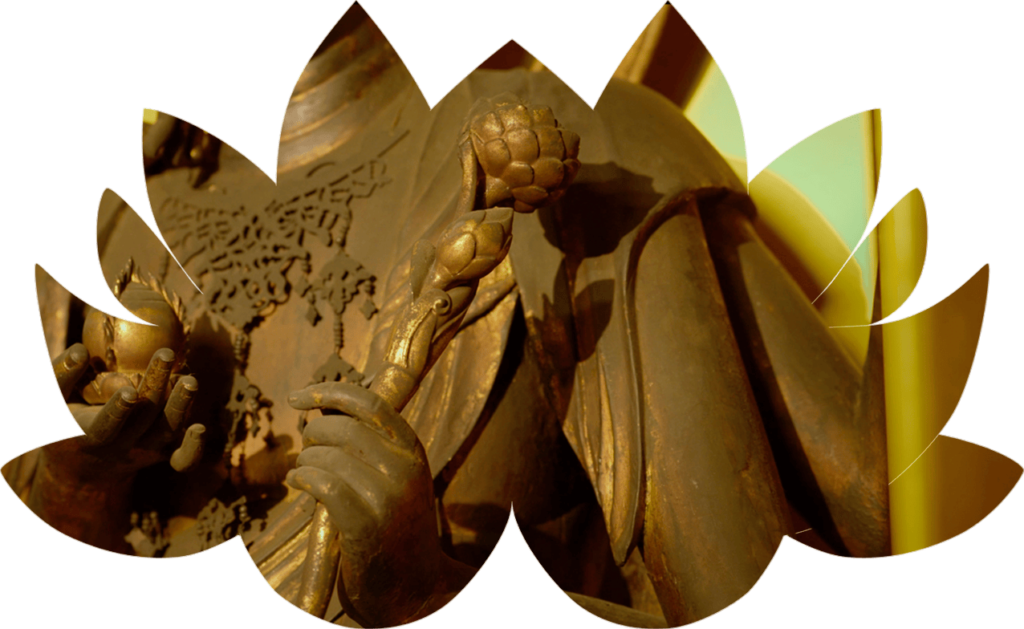
Seated Statue of Nyoirin Kannon (Cintamanicakra)
Seated Statue of Nyoirin Kannon (Cintamanicakra)
Audio Guide Playing
Note: Please use the audio guide with headphones and be careful not to disturb others.
-
A Savior Buddha
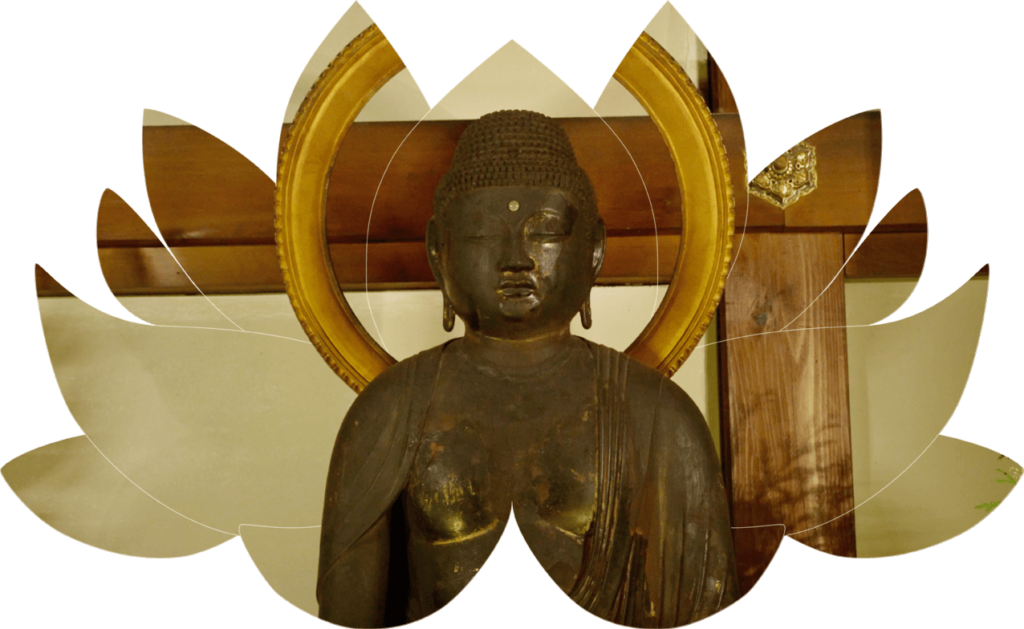
Seated Statue of Amida (Amitabha)
Seated Statue of Amida (Amitabha)
Audio Guide Playing
Note: Please use the audio guide with headphones and be careful not to disturb others.
-
Work by Kaikei, a Representative Medieval Buddhist Sculptor
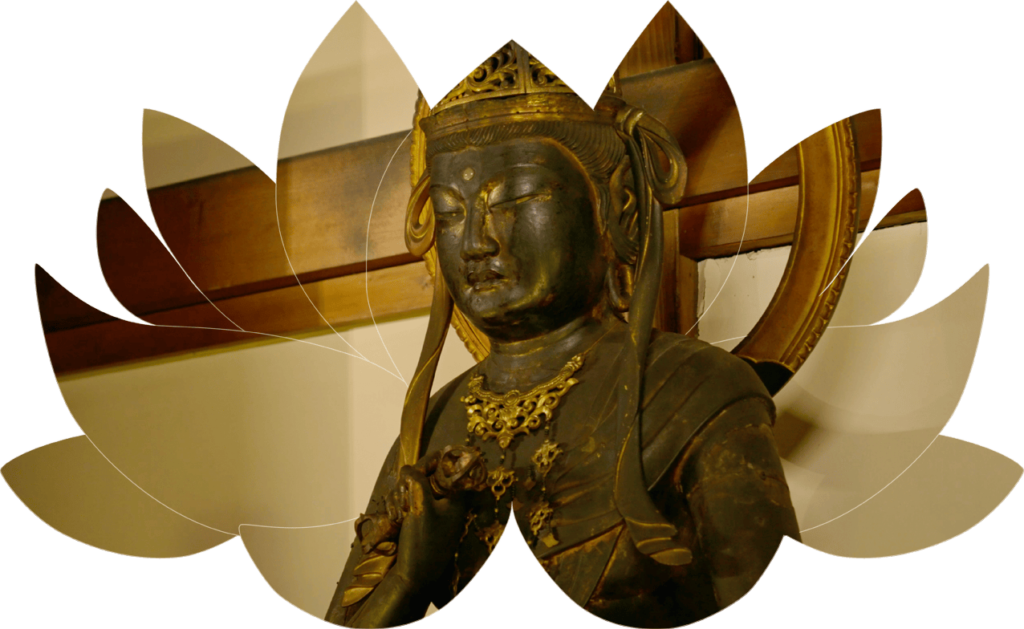
Seated Statue of Kongosatta (Vajrasattva)
Seated Statue of Kongosatta (Vajrasattva)
Audio Guide Playing
Note: Please use the audio guide with headphones and be careful not to disturb others.
-
Adorned with Flowers Throughout the Year
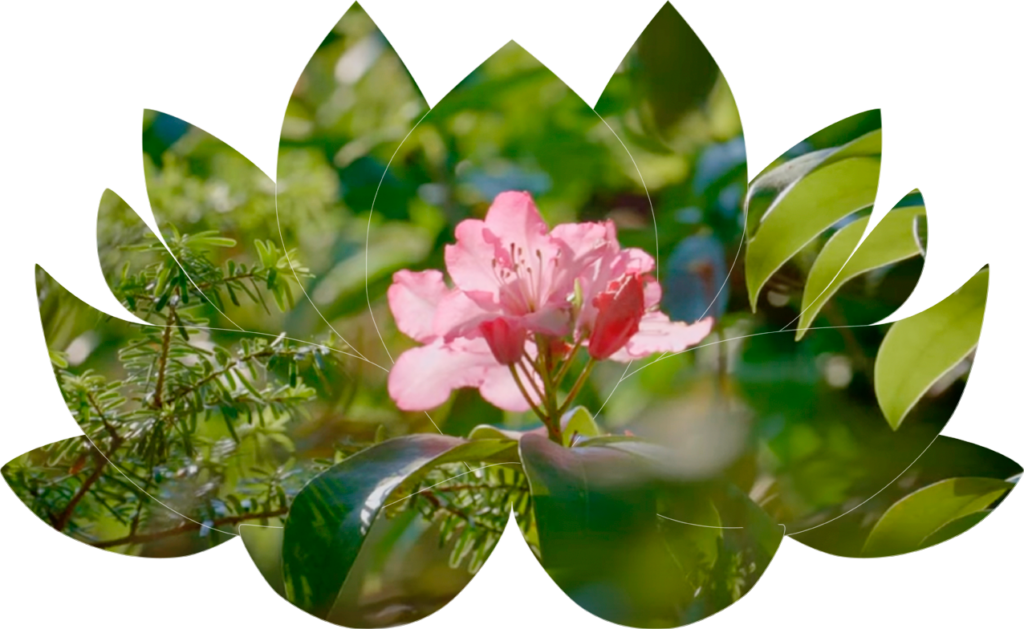
Zuishin-in Temple Grounds
Zuishin-in Temple Grounds
Audio Guide Playing
Note: Please use the audio guide with headphones and be careful not to disturb others.
-
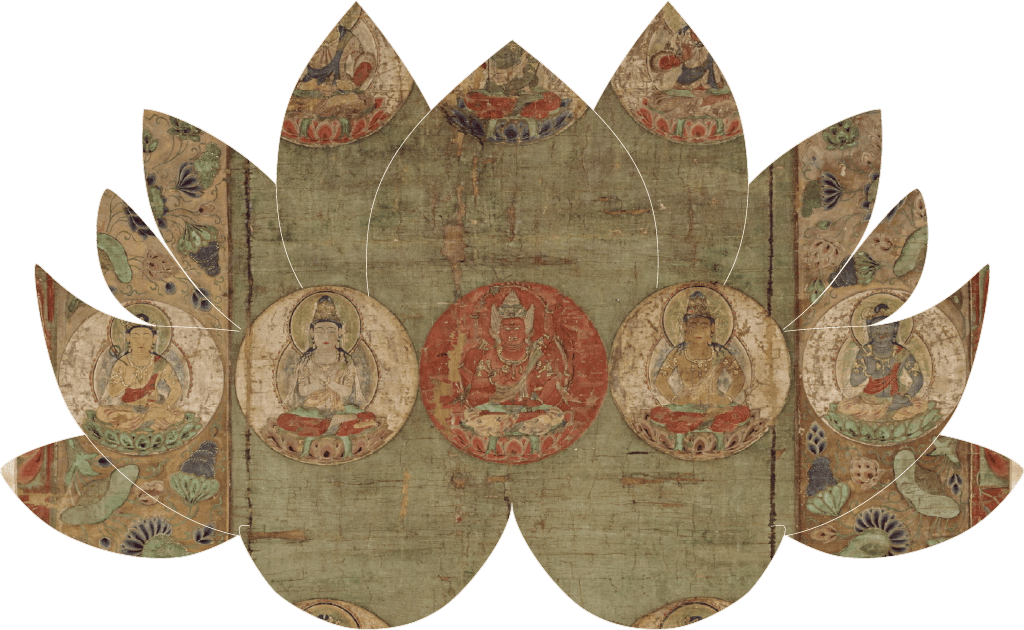
Rāgarāja Mandala
Rāgarāja Mandala
Audio Guide Playing
Note: Please use the audio guide with headphones and be careful not to disturb others.
-
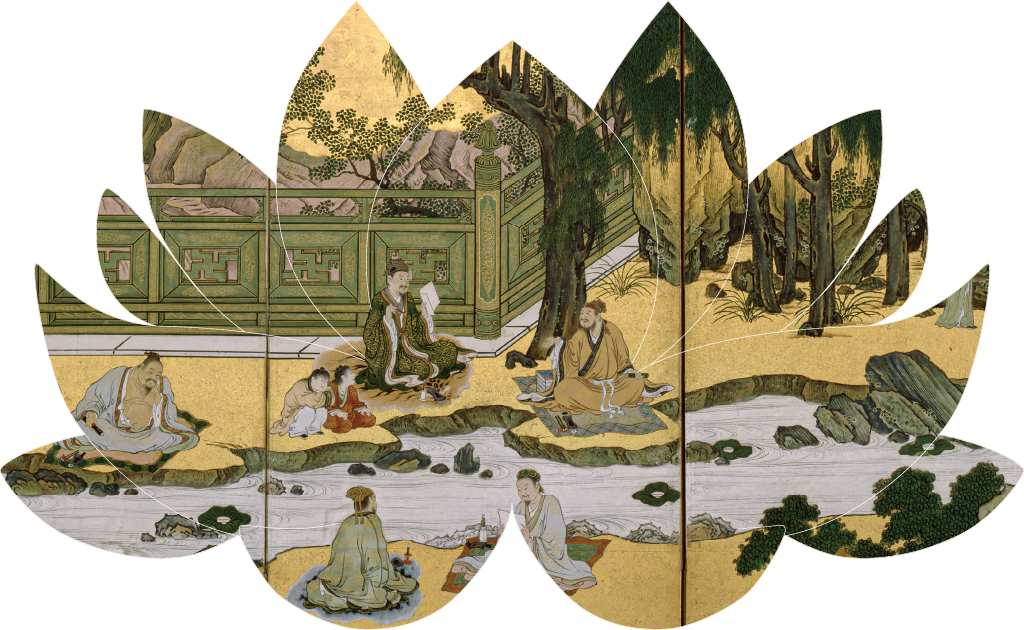
Folding Screen of the Poetry Gathering at the Orchid Pavilion
Folding Screen of the Poetry Gathering at the Orchid Pavilion
Audio Guide Playing
Note: Please use the audio guide with headphones and be careful not to disturb others.
-
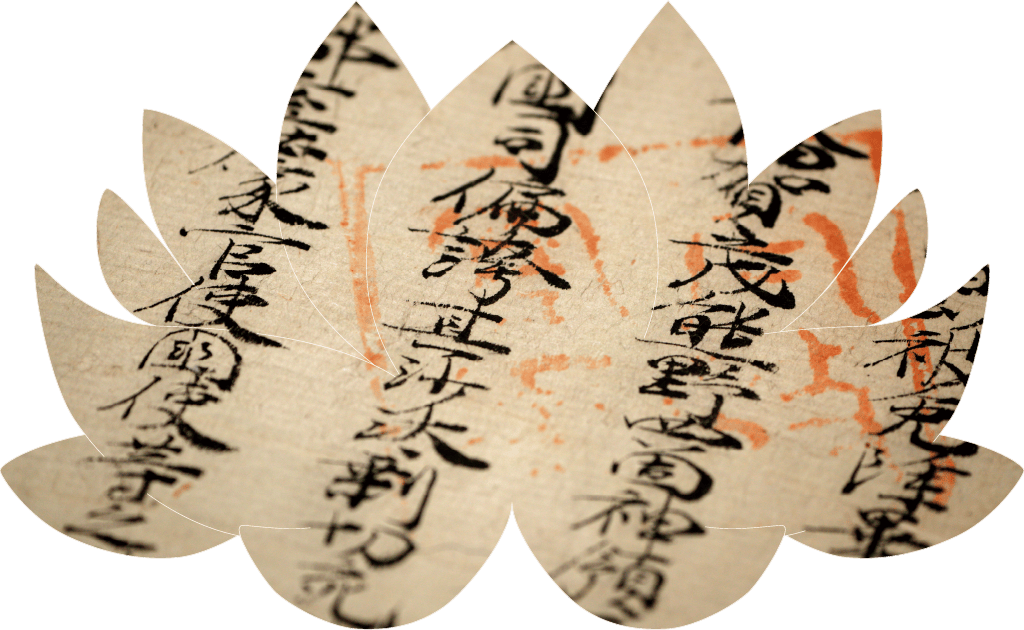
Zuishin’in Temple Documents
Zuishin’in Temple Documents
Audio Guide Playing
Note: Please use the audio guide with headphones and be careful not to disturb others.
-
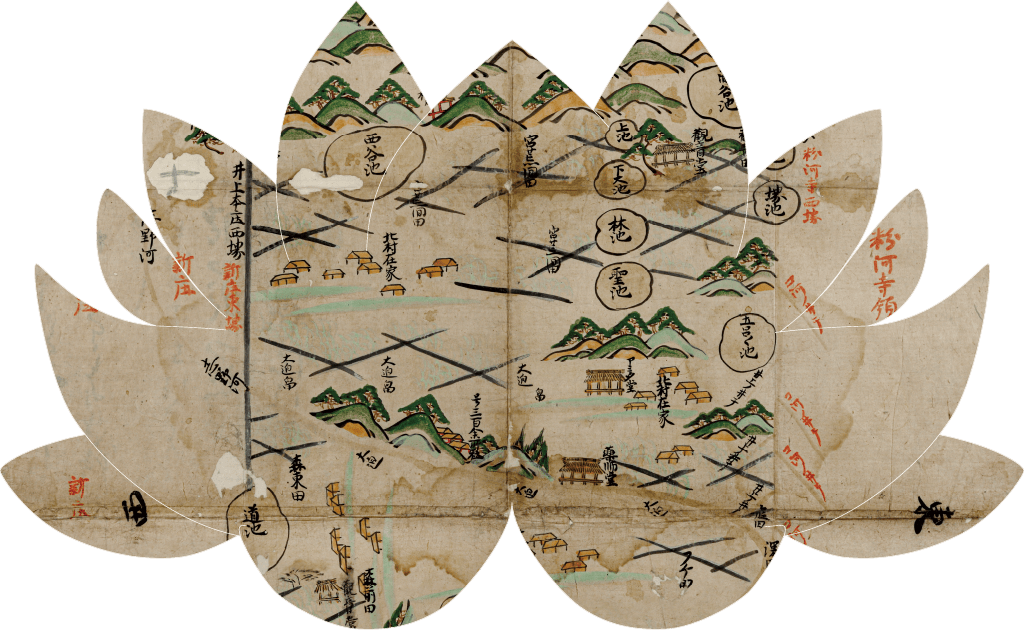
Map of Inoue Honshō in Kii Province
Map of Inoue Honshō in Kii Province
Audio Guide Playing
Note: Please use the audio guide with headphones and be careful not to disturb others.
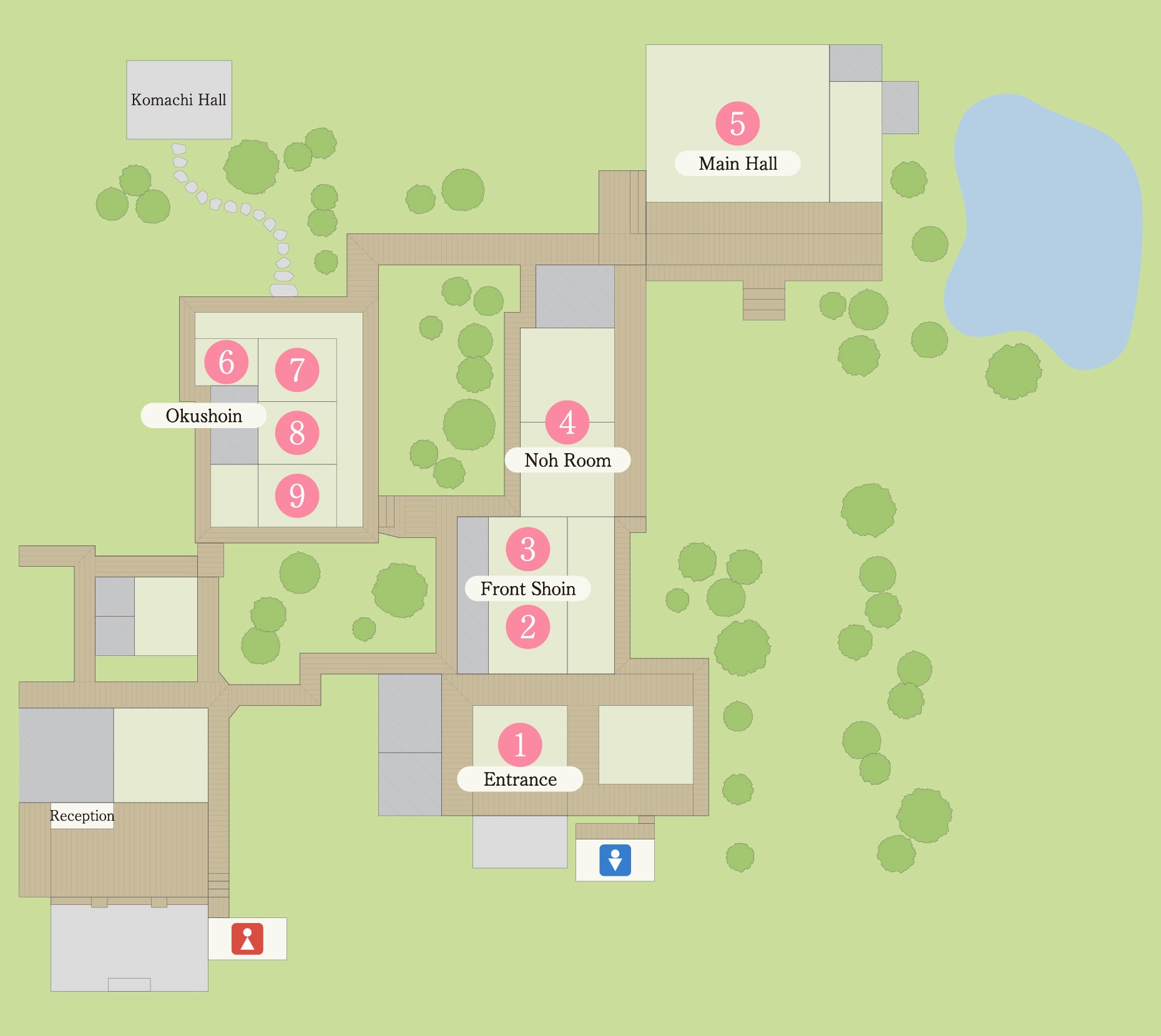
Indoor Map
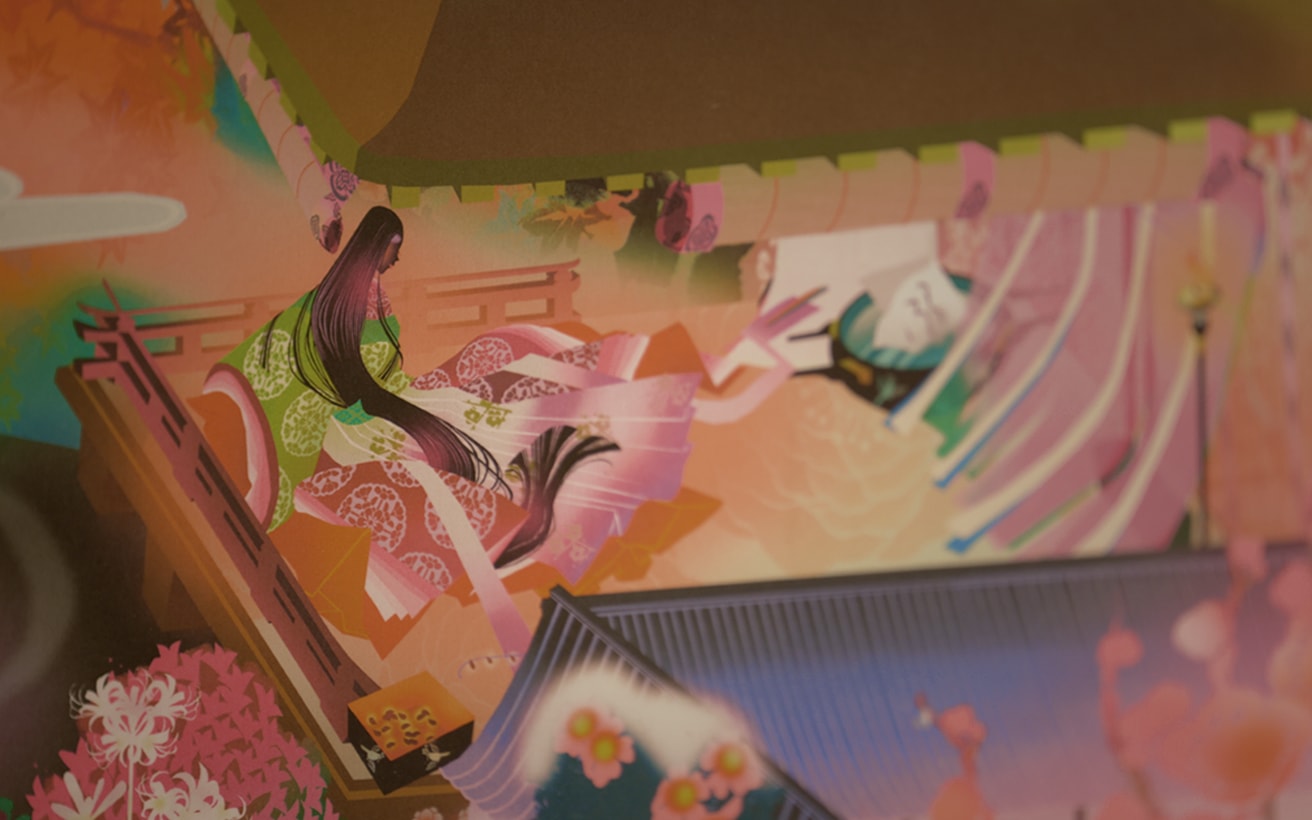
Ono no Komachi and Zuishin-in
VR Content
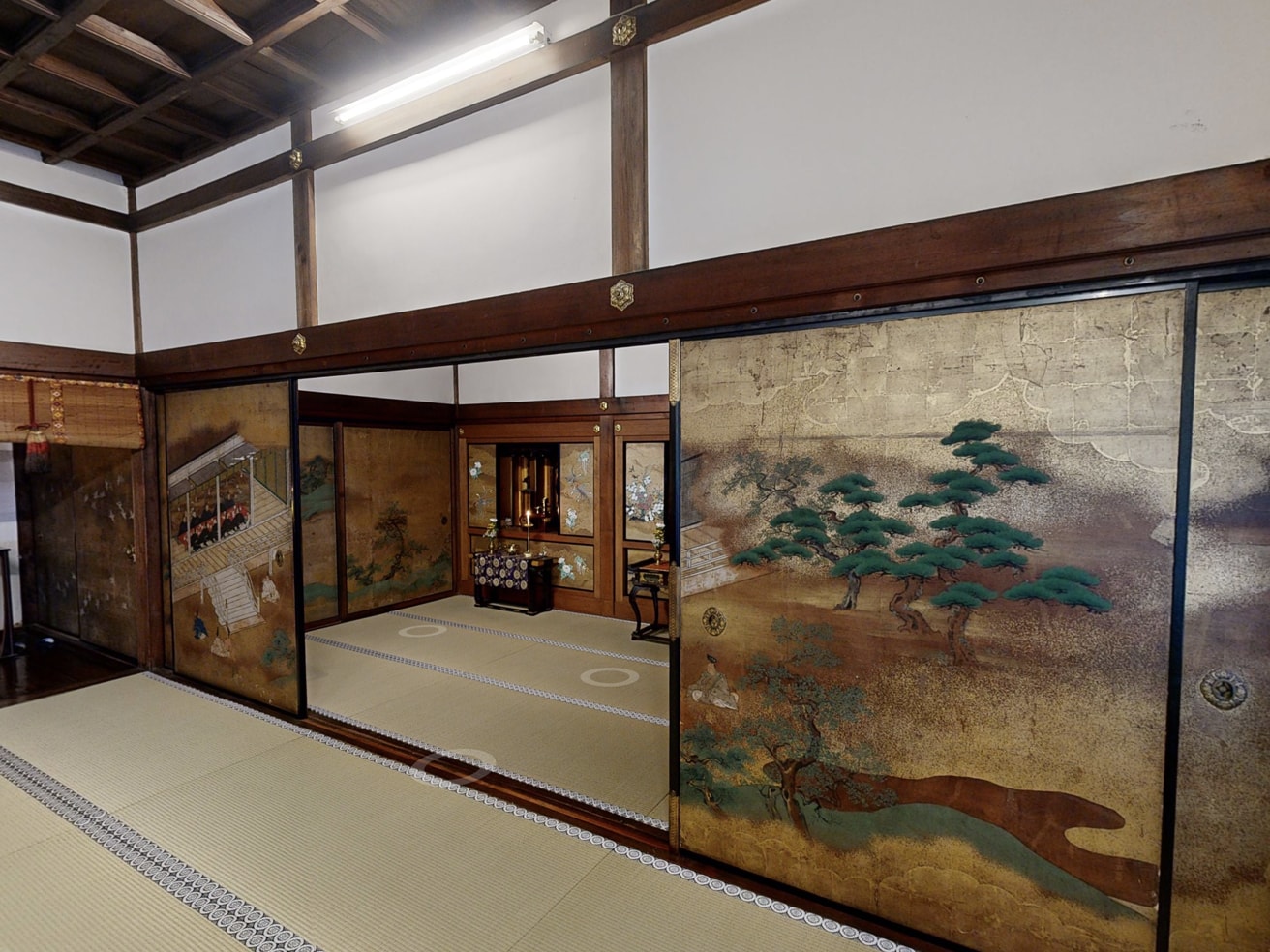
You can also view non-public areas of the main hall
Mandala
A pictorial depiction of various deities from esoteric Buddhism according to its doctrines. Mandala, in Sanskrit, means “that which has an essence.”
Cultural Heritage Featuring This Term
bodhisattva
One who undergoes extensive training in pursuit of Buddha’s enlightenment in order to save all beings.
Cultural Heritage Featuring This Term
Aizen Dharma
This is an ascetic practice focused on Aizen Myō-ō (Rāgarāja) that prays for affection, spiritual fortitude, and other virtues. The Aizen Dharma is said to fulfill the desires of future generations and is considered a secret practice in the Ono school, a major school of Shingon Buddhism. The practice first began in Japan when Buddhist priest Ninkai was compiling poems for the Goshūi Wakashū, a poetry anthology. During the reign of Emperor Go-Reizei (1025–1068), Ninkai conducted the Aizen Dharma for seven days in order to sanctify poems selected and compiled for the anthology. Due to his efforts, the Goshūi Wakashū was successfully completed.
Cultural Heritage Featuring This Term
dharma
Dharma is the act of conducting rituals and ceremonies prescribed by Buddhism, particularly Esoteric Buddhism.
Cultural Heritage Featuring This Term
Ono School
This is one of many schools of thought that derive from Shingon Buddhism. The school was founded by Shōbō (832–909), a Buddhist priest active at the beginning of the Heian period (794–1185). Later, his disciple Ninkai opened Mandaraji Temple (now Zuishin’in Temple) in the Ono area of Kyoto.
Cultural Heritage Featuring This Term
Edo period
The name of the period that lasted approximately 260 years from when Tokugawa Ieyasu founded the Edo shogunate in 1603 after winning the Battle of Sekigahara in 1600 until the restoration of imperial rule by Tokugawa Yoshinobu in 1867. Also called the Tokugawa period.
Cultural Heritage Featuring This Term
Kano school
A line of painters originating from Kano Masanobu who flourished as official artists for the samurai class from the late Muromachi period through to the Edo period.
Cultural Heritage Featuring This Term
Kanō Sansetsu
Kanō Sansetsu (1590?–1651) was a painter of the Kanō school and was active during the early Edo period (1603–1867). He is one of the representative artists of Kyō-Kanō, a Kyoto branch of the Kanō school. He implemented the Kanō school’s open-minded, structural painting style, but he also displayed his own unique style through eccentric compositions and unique figures.
Cultural Heritage Featuring This Term
hakkyoku-nisō folding screens
Hakkyoku-nisō refers to a set of four folding screens, each consisting of eight panels, that are paired and placed into two groups. This creates a total of thirty-two folding screen panels.
Cultural Heritage Featuring This Term
Jin Dynasty
The Jin Dynasty was a Chinese dynasty that stretched over two time periods: the Western Jin (265–316) and the Eastern Jin (317–420).
Cultural Heritage Featuring This Term
The Pavilion of Orchids
This was considered a scenic spot during the Eastern Jin rule located in present-day city of Shaoxing in China’s Zhejiang Province. It is the site where Wáng Xīzhī (303?–361?) held a great banquet and penned his calligraphy masterpiece Ranteijo (Ch. Lántíng Xù, or Preface to the Pavilion of Orchids).
Cultural Heritage Featuring This Term
rokushō green pigment
This is a blue-green inorganic pigment made from copper patina that has been used frequently in Buddhist and Japanese artworks since ancient times. This is a blue-green inorganic pigment made from copper patina that has been used frequently in Buddhist and Japanese artworks since ancient times.
Cultural Heritage Featuring This Term
Nara period
Refers to the period between 710 and 784 when the capital was moved to Heijō-kyō, present day Nara. Lasting a little over 70 years the period saw the reign of seven emperors: Genmei, Genshō, Shōmu, Kōken, Junnin, Shōtoku, and Kenoko. In art history, the Nara period is sometimes referred to as the Tenpyō period and is marked by the splendour of the Buddhist statuary and architecture produced.
Cultural Heritage Featuring This Term
medieval period (feudal Japan)
This historical period stretches from the establishment of the Kamakura shogunate in 1185 by Minamoto no Yoritimo (1147–1199) to the end of the Sengoku (Warring States) period (1467–1568).
Cultural Heritage Featuring This Term
The Five Volumes
・Saeki-in Memorandum ・Imperial Proposal for Tōdaiji Temple Palace and Garden ・Left Capital Bureau Diagram ・Signed Record of Money Sent by Saeki Sukune no Imaemishi and Mamori ・Letters of Credence of Daianji Temple’s Three Administrators
Cultural Heritage Featuring This Term
Shōbō (Rigen Daishi)
Shōbō (832–909), also known by the honorific title Rigen Daishi, was a Shingon priest active during the early Heian period (794–1185). He was the great-great grandson of Emperor Kōnin (708–782). He studied at Tōdaiji Temple from a young age and went on to become a master in Shingon Esoteric Buddhism, founding the Ono school. In 907, he founded Daigoji Temple and became the temple’s first head priest. He was an active leader in the sect, holding such positions as senior priest at Tōji Temple and head priest at Tōnan’in Temple. He is also known for his work continuing the legacy of En no Gyōja (634–700?), restoring the ascetic training spot on Mt. Kinpu, and for initiating the sacred goma fire purification ritual. He is honored for founding the Shūgendō Tōzan school. This religious lineage would find its way to Mandaraji Temple (now Zuishin’in Temple) in the Ono area of Kyoto, and it spread widely under the Shingon Ono school moniker.
Cultural Heritage Featuring This Term
Kangen
Kangen (854–925) was a Shingon priest active in the mid-Heian period (794–1185). He served as administrator of Ninnaji Temple, senior priest of Tōji temple, head priest of Daigoji Temple, and head priest of Kongōbuji Temple.
Cultural Heritage Featuring This Term
shōen (estate) system
This was a Japanese system of land ownership. Following the collapse of the state ownership system, known as the kōchi kōmin seido in Japanese, a new system took shape in which groups such as nobles, temples, shrines, and warriors could own and rule over land.
Cultural Heritage Featuring This Term
Kinokawa River
This river flows from Nara Prefecture to Wakayama Prefecture. Boasting a total length of 136 kilometers, it is one of the largest rivers on the Kii Peninsula. The river is important both historically and culturally, and it greatly influenced religion, literature, and agriculture.
Cultural Heritage Featuring This Term
oritatami book binding technique
This is a book binding technique in which paper is folded and bound in the shape of an accordion. This style is often used in Buddhist scriptures and iconographies.
Cultural Heritage Featuring This Term
Heian period
The Heian period lasted for approximately 400 years between the transfer of the capital to Heian-kyo (present day Kyoto) by Emperor Kanmu in 794 and the foundation of the Kamakura Shogunate in 1185. The period is often divided into three sections: the Early, Mid- and Late Heian periods. In other words, the period of reviving the political system based on Ritsuryo codes, the regency period and the Insei period (governed by a retired emperor), respectively. (The end of the Late Heian period was ruled by the Taira clan.) Also referred to as the period of the Heian imperial court.
Cultural Heritage Featuring This Term
Todai-ji
Founded in the early 8th century by Emperor Shōmu, this temple serves as the head temple of the Kegon sect. The principal image is the Vairocana Buddha, commonly known as the Great Buddha of Nara, and its Great Buddha Hall is one of the largest wooden structures in the world.
Cultural Heritage Featuring This Term
Wáng Xīzhī
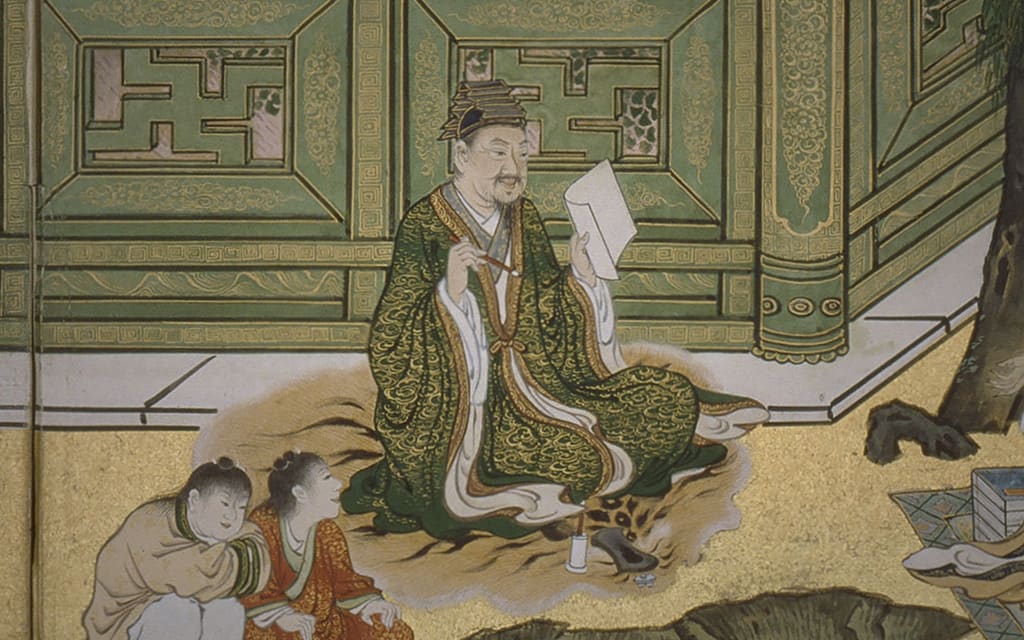
Wáng Xīzhī (303?–361?) was an Eastern Jin Dynasty calligrapher and politician. He was a master calligrapher and one of the greatest calligraphers in Chinese history. With his elegant writing style, he left behind several timeless masterpieces of calligraphy, including Ranteijo (Ch. Lántíng Xù, or Preface to the Pavilion of Orchids).
Cultural Heritage Featuring This Term
lotus and grass pattern
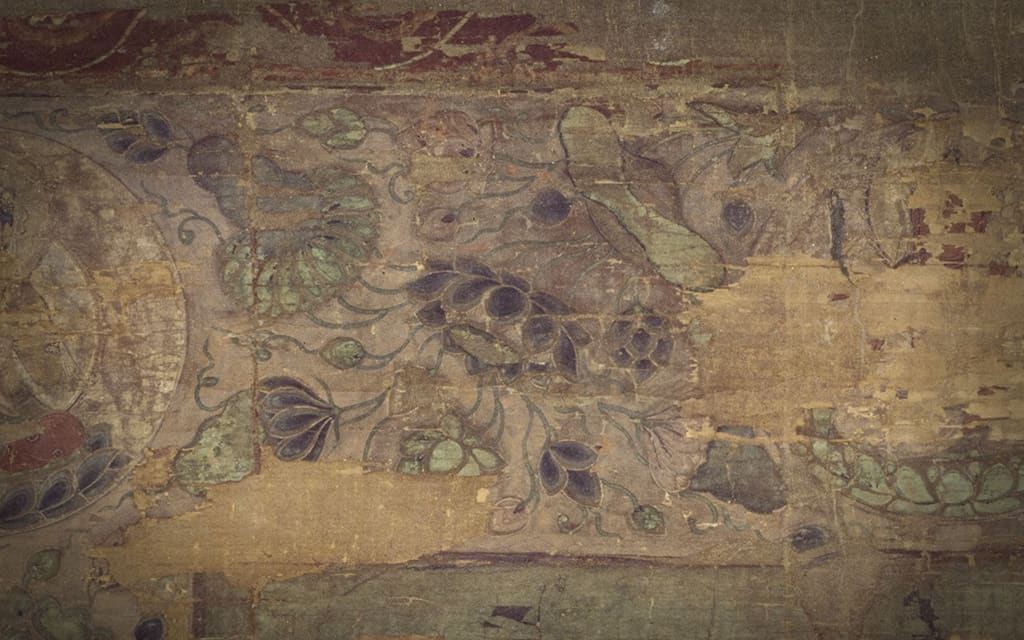
This is a decorative pattern of lotus blossoms, which symbolize purity, enlightenment, and the Pure Land, and Chinese grass, which symbolizes permanence and prosperity.
Cultural Heritage Featuring This Term
Aizen Myō-ō (Rāgarāja)
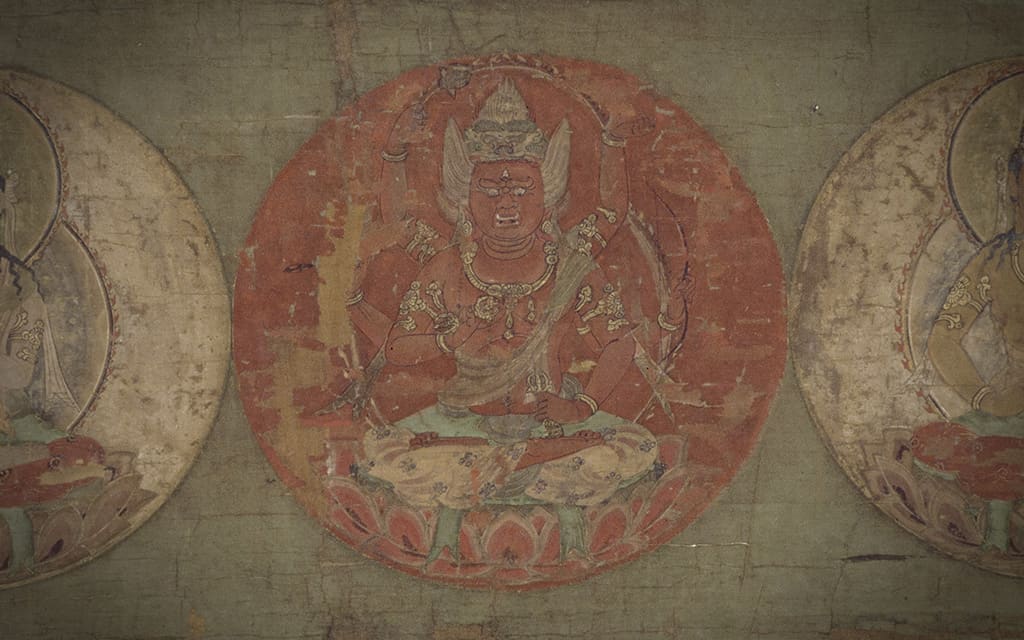
Aizen Myō-ō (Rāgarāja) is a Wisdom King described in the Yoga Sutras, an Esoteric Buddhist scripture. Aizen Myō-ō is often depicted with six arms, a wrathful expression, red skin, and a lion crown. He is typically shown sitting on a lotus dais atop a holy vase with a flaming sun wheel in the background. In his six hands he holds four sacred objects: a five-pronged pestle, five-pronged bell, bow and arrow, and lotus blossom. These symbolize the four virtues of good health, wealth, affection, and spiritual fortitude. It is believed Aizen Myō-ō chants twelve great vows to save people from suffering, and he is revered by worshippers as a symbol of the virtue of affection. This virtue relates to happy marriages, successful matchmaking, harmony between husband and wife, and good human relationships. In addition, Aizen Myō-ō symbolizes the concept of bonno soku botai, which roughly translates to “suffering is enlightenment,” or the idea that human desire and suffering become catalysts for enlightenment. Aizen Myō-ō also embodies the Rishu-kyō scripture, an important text in Esoteric Buddhism.
Cultural Heritage Featuring This Term
Hanezu Dance
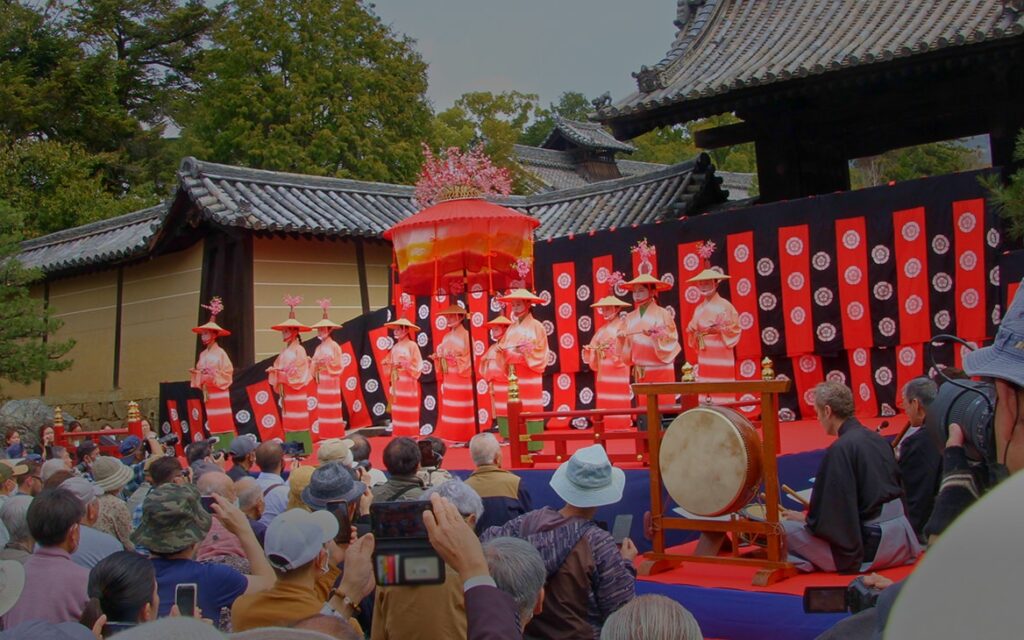
A dance themed on the tragic romance between Ono no Komachi and General Fukakusa, as preserved at Zuishin-in.
Cultural Heritage Featuring This Term
Gokusaishiki Umeiro Komachi Ezu
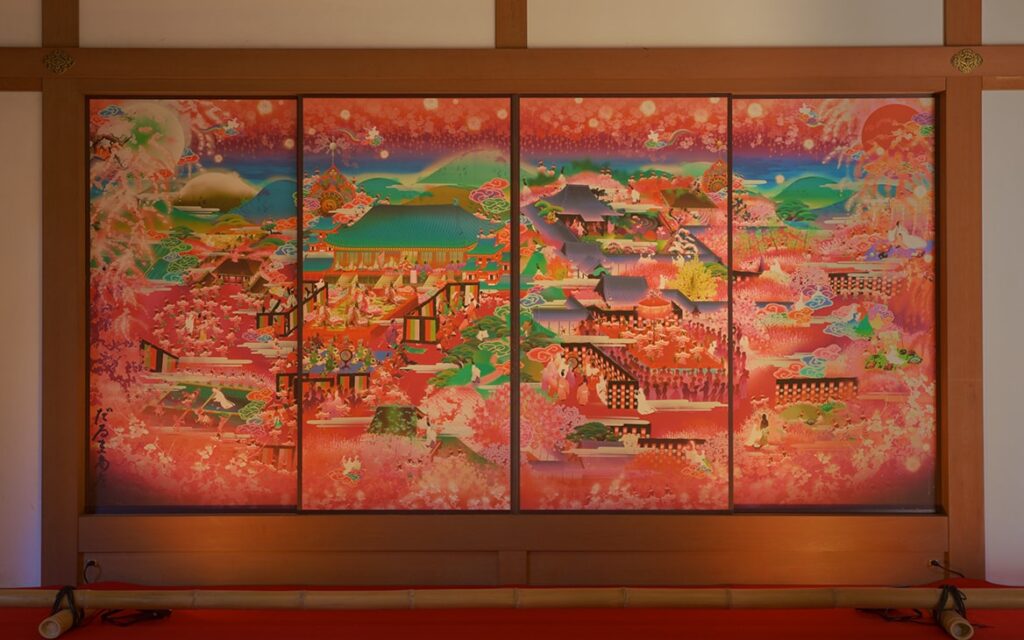
In 2009, four painted sliding doors were donated by the artist group Daruma Shoten. These panels depict scenes from the life and various legends of Ono no Komachi.
Cultural Heritage Featuring This Term
Sotoba Komachi
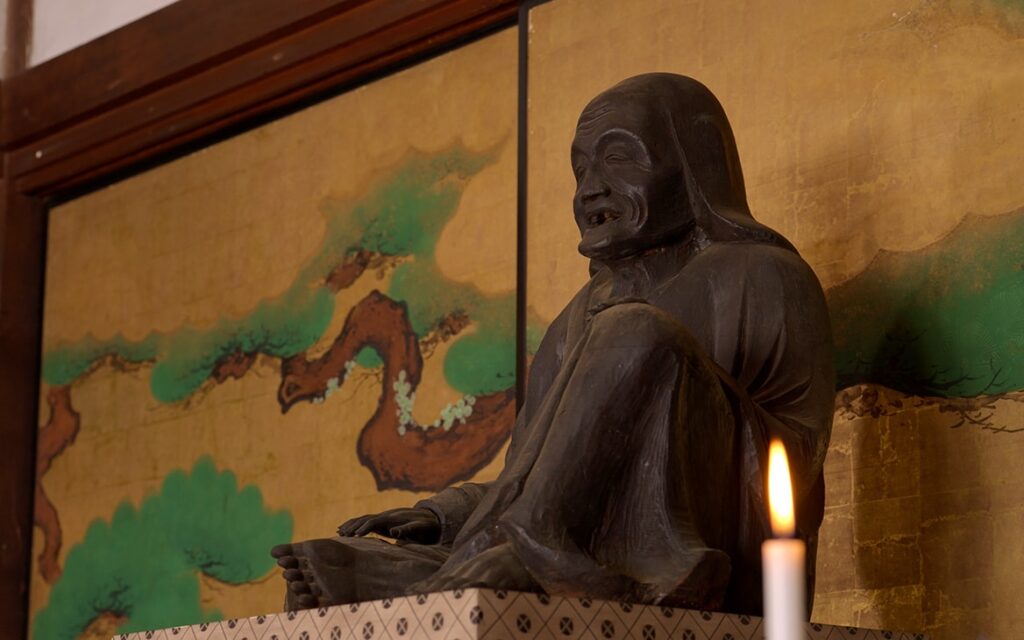
Sotoba Komachi is a representative Noh work featuring Ono no Komachi as the protagonist, categorized under the "Komachi works." The Sotoba Komachi Seated Statue of Zuishin-in is believed to depict Komachi in her later years.
Cultural Heritage Featuring This Term
Fumihari Jizo Statue
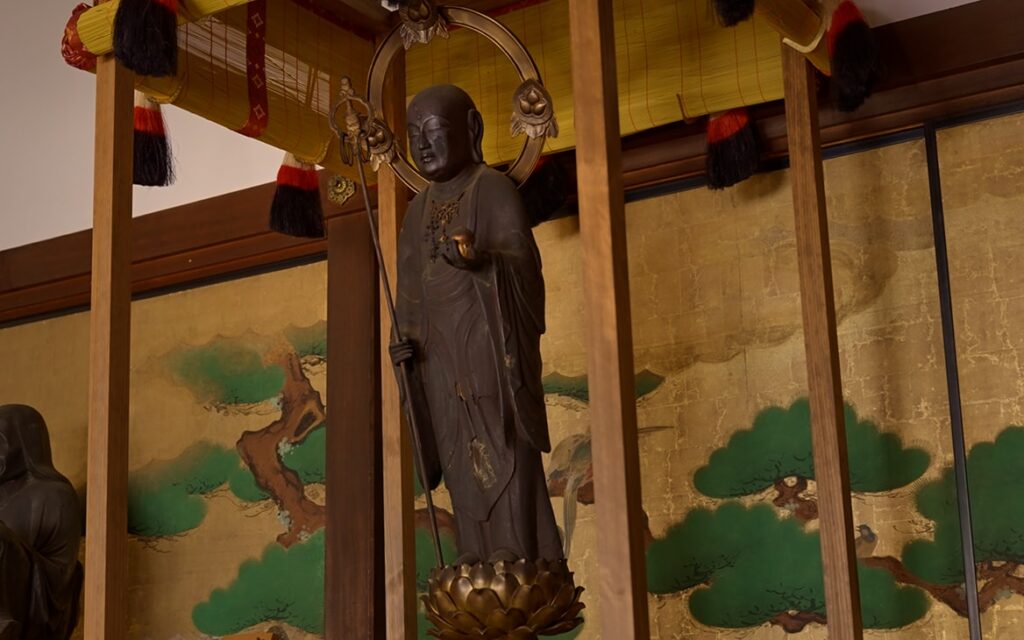
The statue is said to be constructed using love letters addressed to Komachi as its lining.
Cultural Heritage Featuring This Term
Descendant of the Japanese nutmeg tree
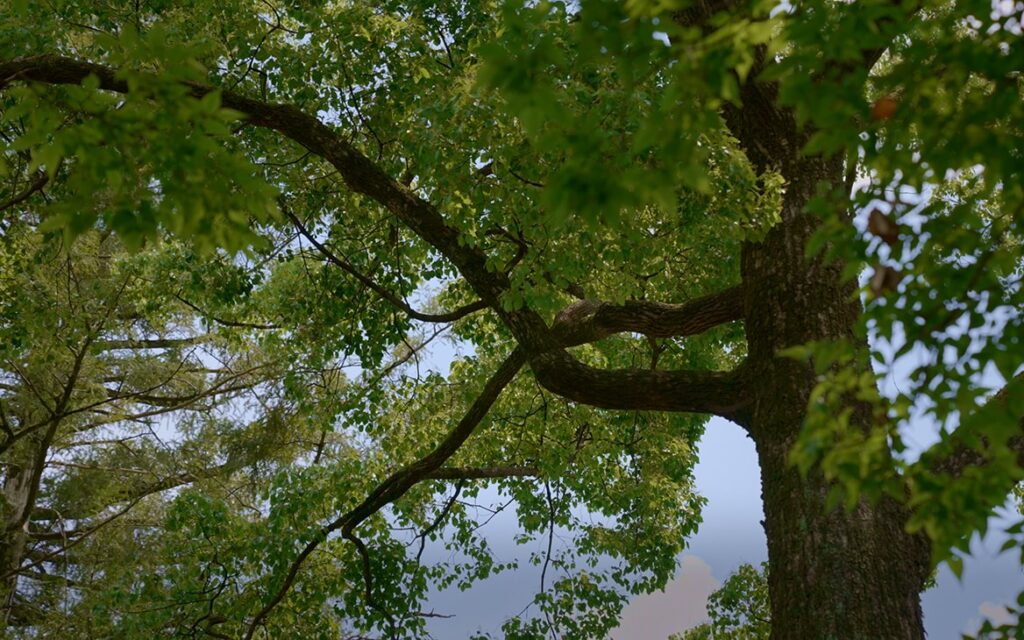
The descendant of the Japanese nutmeg tree planted by Ono no Komachi is said to have been sown in Ono-no-sato in memory of General Fukakusa.
Cultural Heritage Featuring This Term
tragic romance with General Fukakusa
The tale recounts the devoted courtship of General Fukakusa, who visited Ono no Komachi for 100 consecutive nights, only to tragically pass away without winning her affection. This story is famously known as "Momoyogayoi" or "The Hundred-Night Visits." It is said that Komachi marked the days with Japanese nutmeg seeds brought by the general with each visit.
Cultural Heritage Featuring This Term
Edo period
The name of the period that lasted approximately 260 years from when Tokugawa Ieyasu founded the Edo shogunate in 1603 after winning the Battle of Sekigahara in 1600 until the restoration of imperial rule by Tokugawa Yoshinobu in 1867. Also called the Tokugawa period.
Cultural Heritage Featuring This Term
Ono no Takamura
An early Heian-period court noble and literary figure, he lived from 802 to 853 and held the position of Councilor. In the Ogura Hyakunin Isshu poetry anthology, he is referred to as Councilor Takamura. He excelled in both Chinese poetry and Japanese waka.
Cultural Heritage Featuring This Term
Ono no Imoko
The first envoy to the Sui dynasty. His birth and death years are unknown. On the orders of Prince Shotoku, he traveled to the Sui dynasty in the 15th year of Empress Suiko's reign (607), carrying a diplomatic message.
Cultural Heritage Featuring This Term
(Letter) Mound
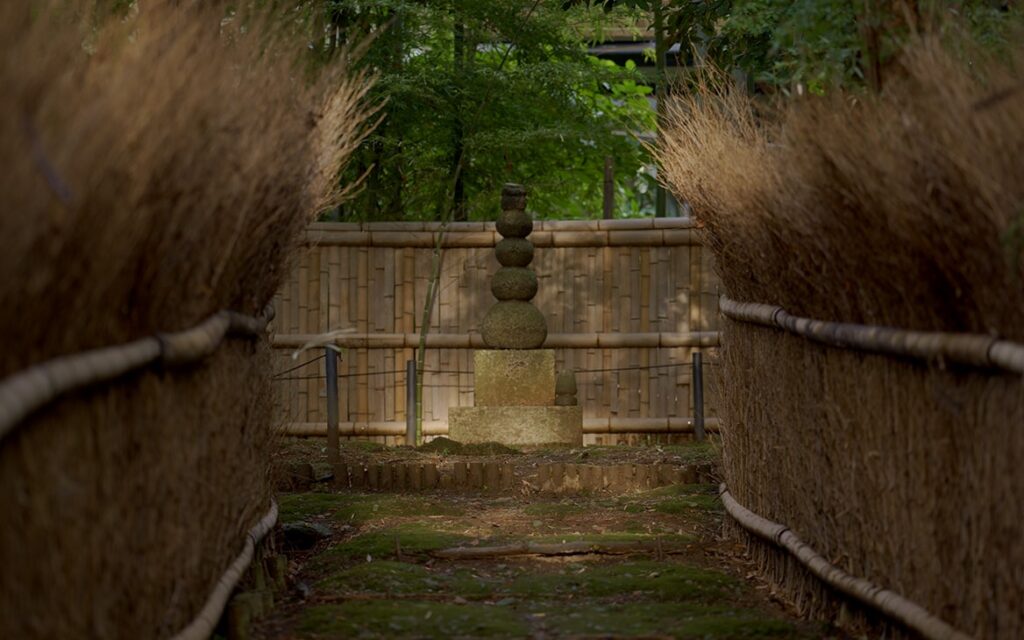
The mound located behind the Main Hall where a thousand letters for Ono no Komachi from numerous noble suitors, including General Fukakusa, were buried.
Cultural Heritage Featuring This Term
Make-Up Water Well
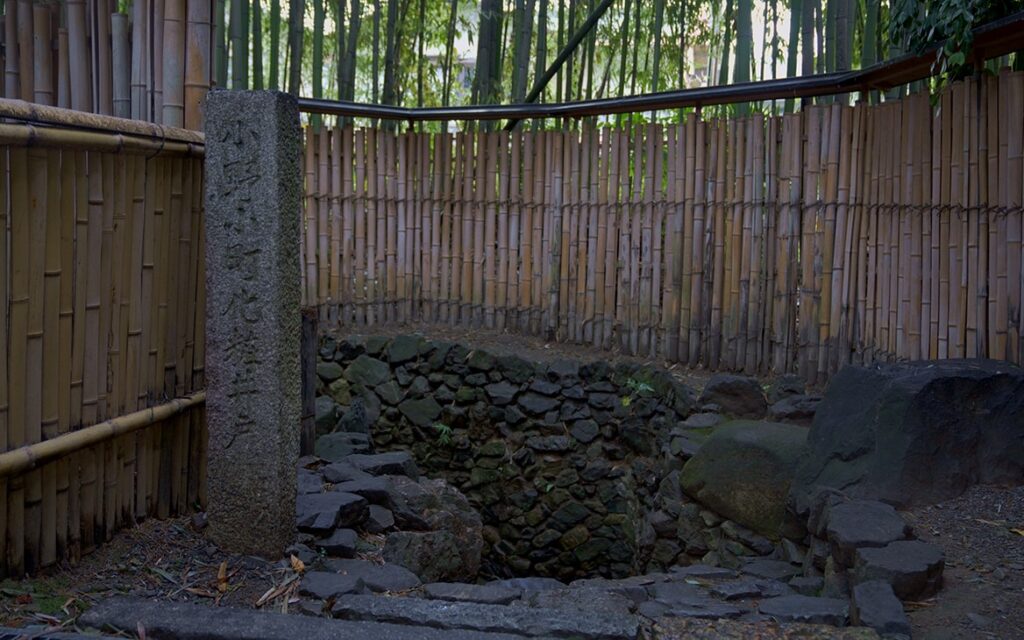
The well is the remains of Ono no Komachi's residence. It is said that Ono no Komachi used the water from this well for her make-up.
Cultural Heritage Featuring This Term
Ono no Komachi
A female poet from the early Heian period whose birth and death years are unknown. She is recognized as both one of the Rokkasen (six renowned poets) and the Thirty-Six Immortals of Poetry. Her origins are shrouded in mystery with various theories surrounding them. She served in the imperial courts of Emperors Ninmyo and Montoku. Renowned as a paragon of beauty, she became a legendary figure and a popular subject in Noh plays, joruri ballads, and otogi-zoshi (illustrated short stories).
Cultural Heritage Featuring This Term
Rokkasen
The six renowned poets of the ninth century, as listed in the preface to the Kokin Wakashu poetry anthology. They include the monk Henjo, Ariwara no Narihira, Fun'ya no Yasuhide, the priest Kisen, Ono no Komachi, and Otomo no Kuronushi. The term "Rokkasen" was attributed to them in later generations.
Cultural Heritage Featuring This Term
Shui Miyako Meisho Zue (Supplemental Pictorial Guide to Scenic Spots in Kyoto)
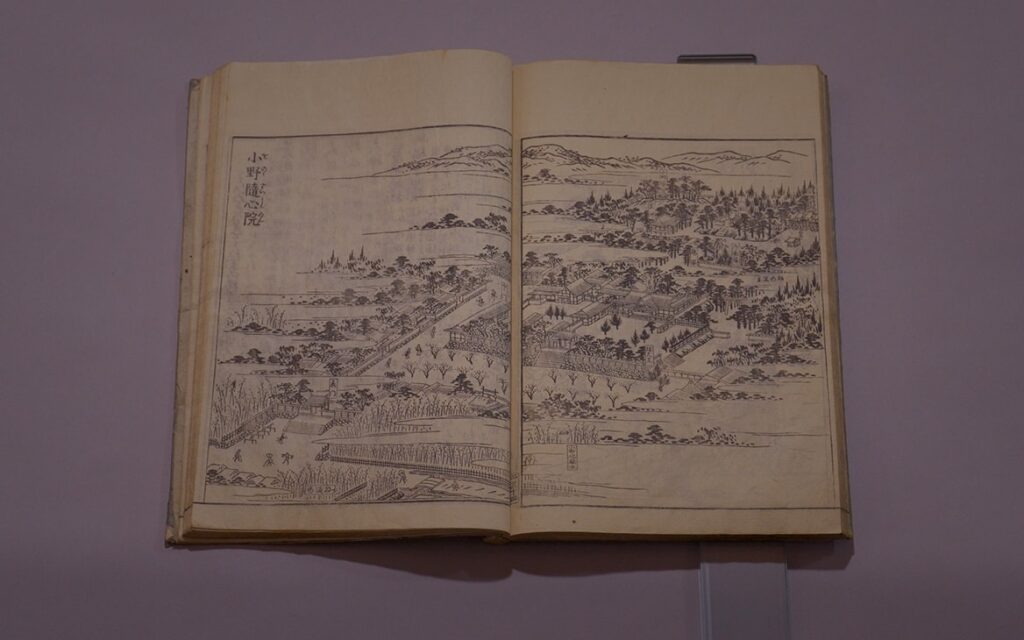
A guide to scenic areas in Kyoto. Published in 1787. It consists of five volumes printed in ink. It is a sequel to the Miyako Meisho Zue published in 1780.
Cultural Heritage Featuring This Term
hanezu
An ancient Japanese term referring to pale pink.
Cultural Heritage Featuring This Term
Ono (Clan)
The Ono clan was active from the early 7th century to the mid-Heian period. Many of its members served as local officials, as well as envoys to China, including Ono no Imoko. The clan also included figures such as Ono no Takamura, who excelled in Chinese poetry and waka, rising to the rank of state councilor, and Ono no Michikaze, renowned as a master calligrapher.
Cultural Heritage Featuring This Term
Ono Plum Garden
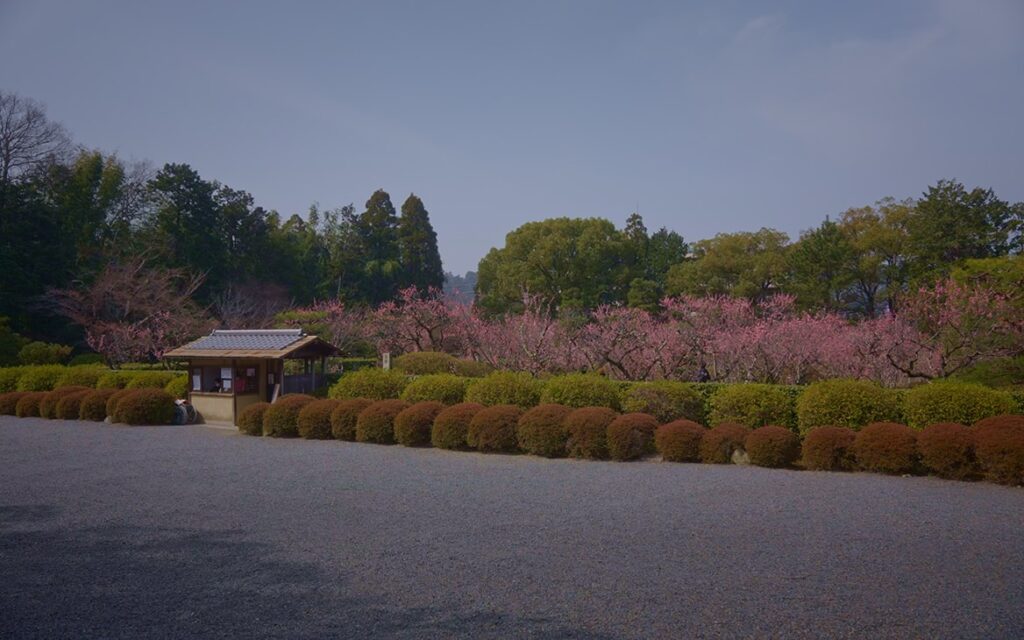
Contains approximately 200 plum trees, which typically reach their peak bloom around mid-March each year.
Cultural Heritage Featuring This Term
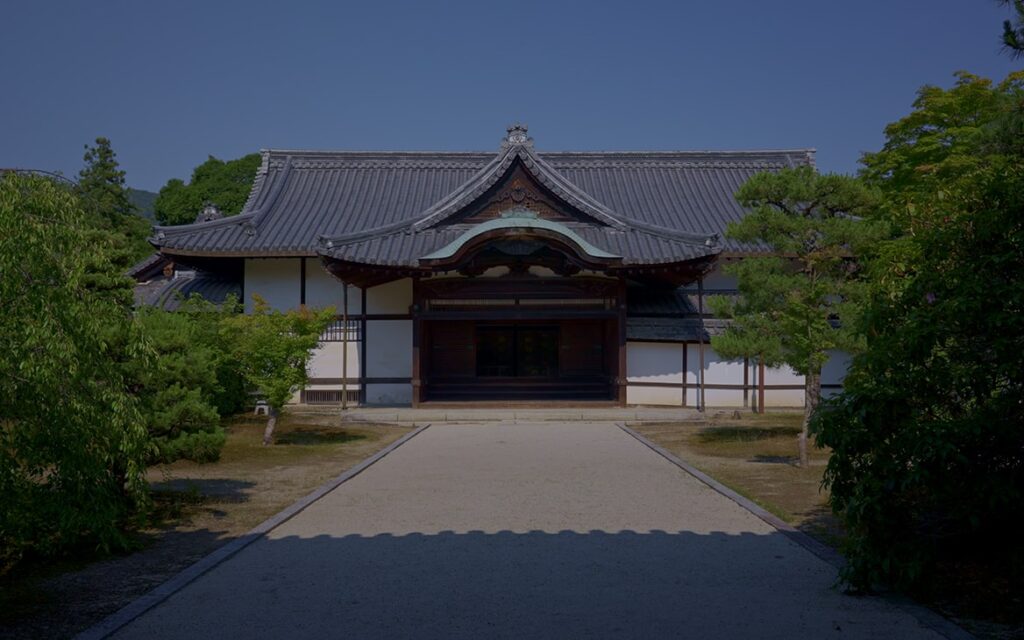
yakui-mon gate
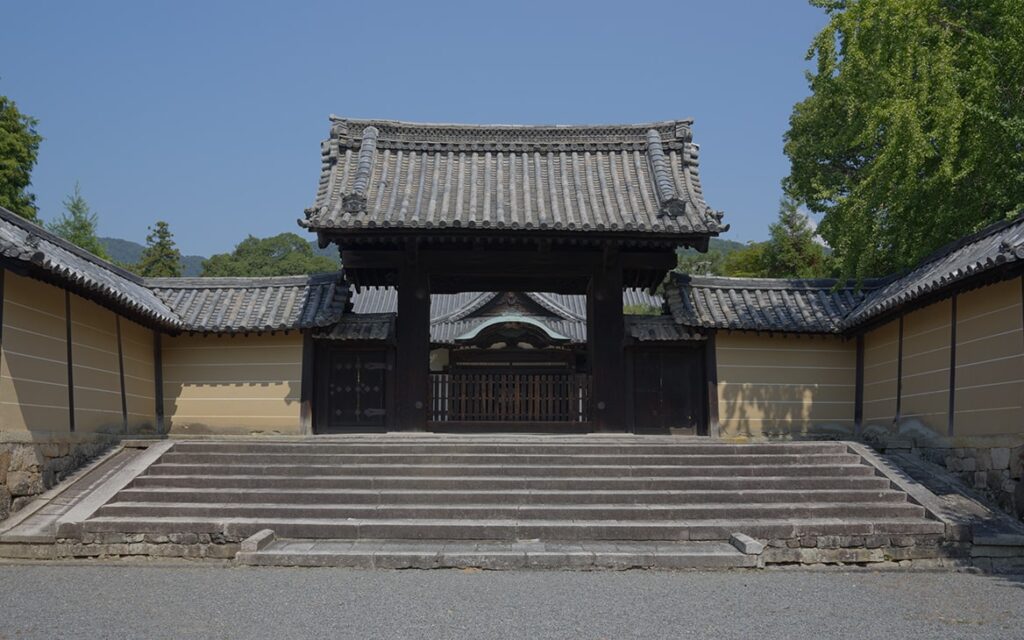
A type of castle gate. It features a gabled roof supported by two main pillars, with additional support pillars located only behind them.
Cultural Heritage Featuring This Term
nagaya-mon (gate)
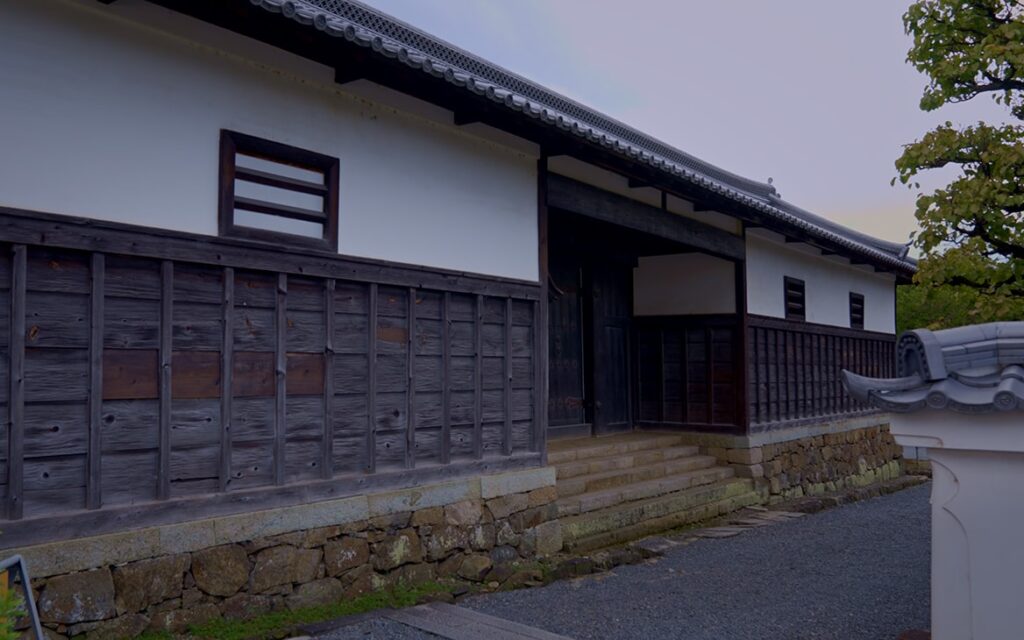
A traditional gate style featuring an entrance gate placed in the center of a long building, with guardhouses for attendants situated on either side of the gate.
Cultural Heritage Featuring This Term
main gate
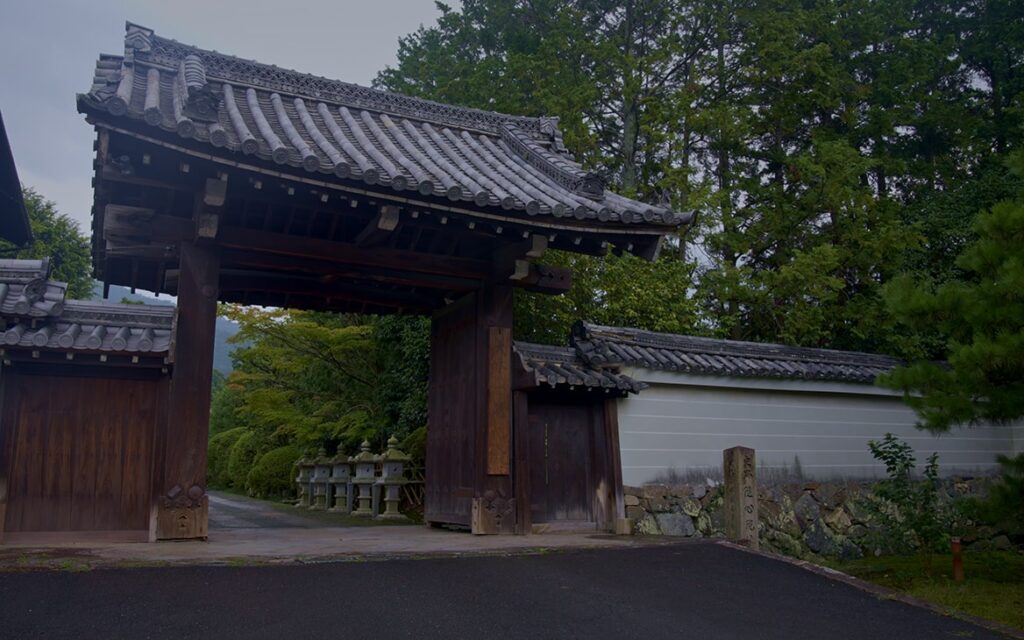
Large outer gate. The primary gate of the overall structure or complex.
Cultural Heritage Featuring This Term
five-pronged club
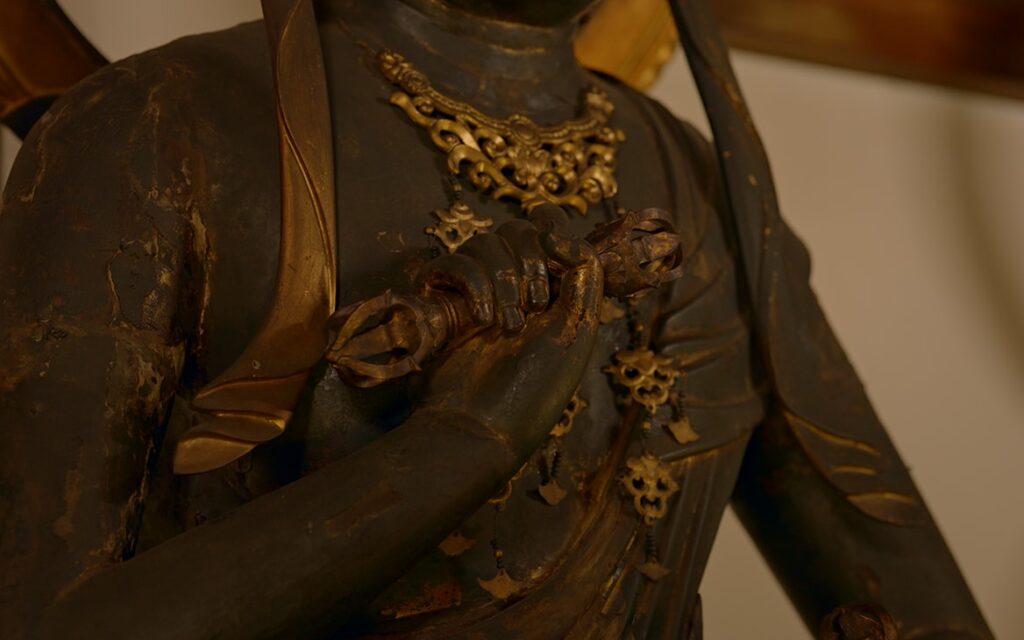
In esoteric Buddhist rituals, this ritual implement, when held by a practitioner, serves to dispel evil and overcome personal earthly desires. The prongs at both ends branch into five sections.
Cultural Heritage Featuring This Term
five-pronged bell
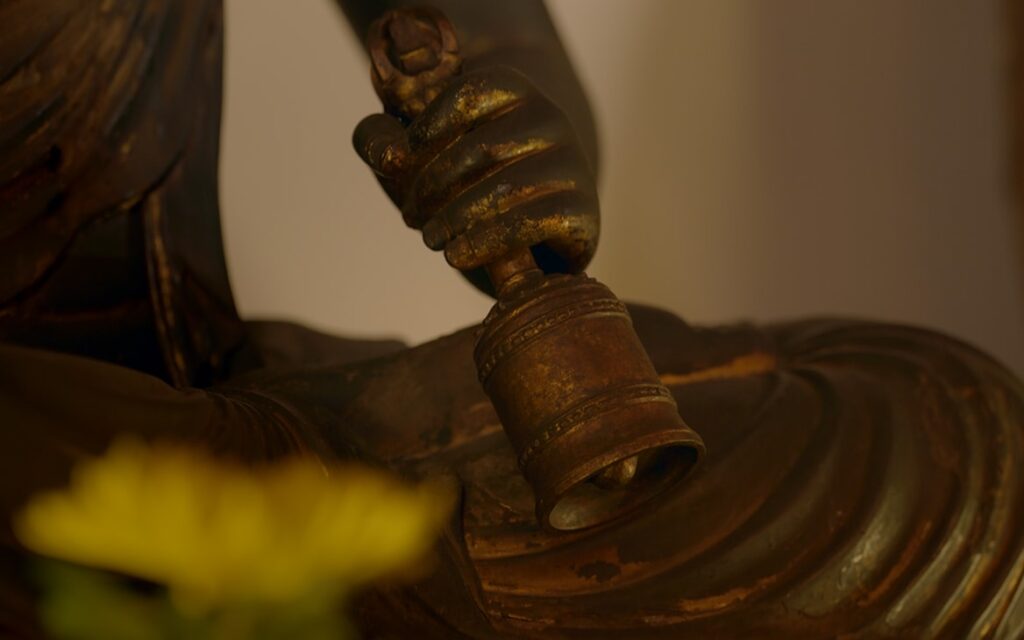
In esoteric Buddhist practices, a ritual implement shaken and rung to awaken and delight various deities. The bell has a five-pronged handle.
Cultural Heritage Featuring This Term
necklace
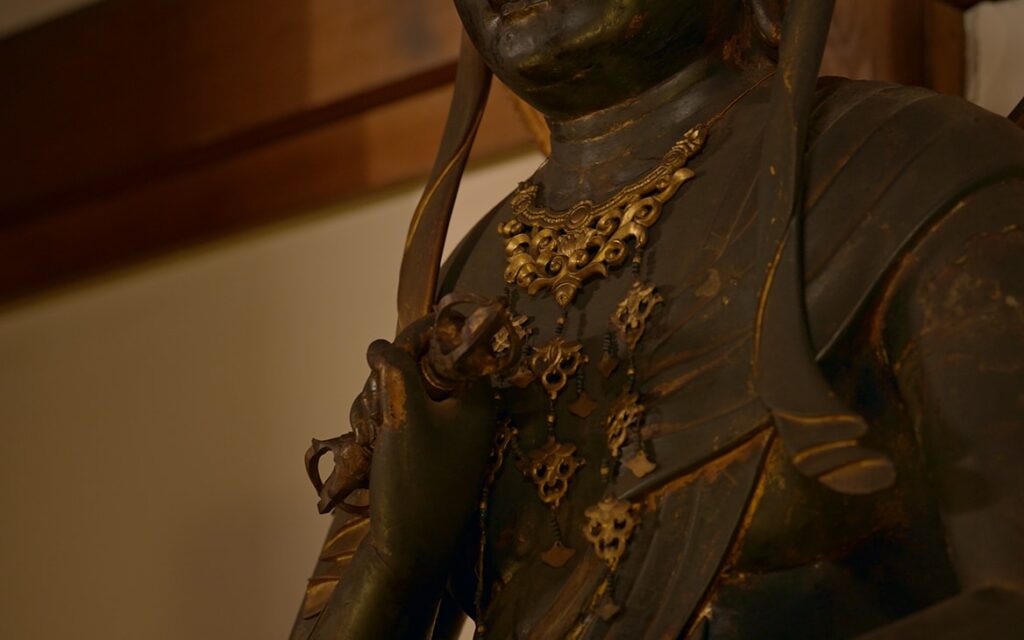
Necklaces and bracelets adorned with jewels, as well as adornments for bodhisattvas and esoteric Buddhist deities. Also a decorative item for Buddhist halls and altars.
Cultural Heritage Featuring This Term
Dainichi Nyorai (Vairocana)
The principal deity of Shingon Esoteric Buddhism, serving as the main deity in the Mandala of the Two Realms; the Vajradhatu and Garbhadhatu Mandalas.
Cultural Heritage Featuring This Term
Kaikei
He was a member of the Kei school of Buddhist sculptors active in the early Kamakura period. Alongside Unkei, he played a significant role in the development of a new style of Kamakura sculpture and has been regarded as an important figure in this accomplishment. Dates unknown.
Cultural Heritage Featuring This Term
Kamakura period
The name of the period that lasted for approximately 150 years from when Minamoto no Yoritomo founded the Kamakura Shogunate in 1192 until Hojo Takatoki’s death in 1333.
Cultural Heritage Featuring This Term
Unkei
A Buddhist sculptor active from the late Heian period to the early Kamakura period who lived until 1224. He was the son of the Nara Buddhist sculptor Kokei, who was based at Kofuku-ji Temple. He perfected a new style of Kamakura sculpture initiated by Kokei.
Cultural Heritage Featuring This Term
lattice design
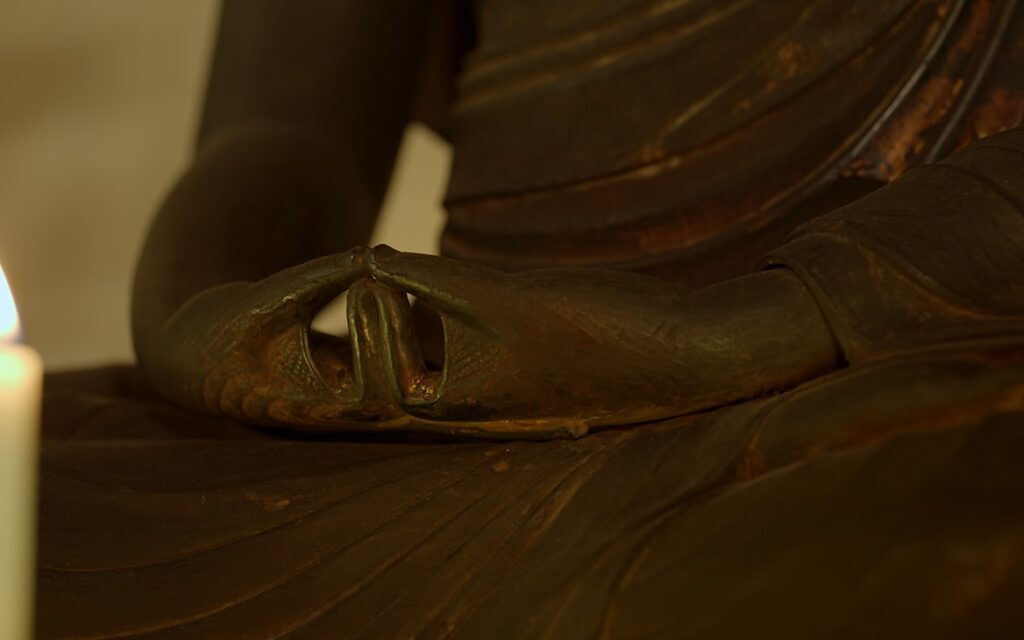
This lattice pattern is etched on the web-like membranes.
Cultural Heritage Featuring This Term
web-like membranes
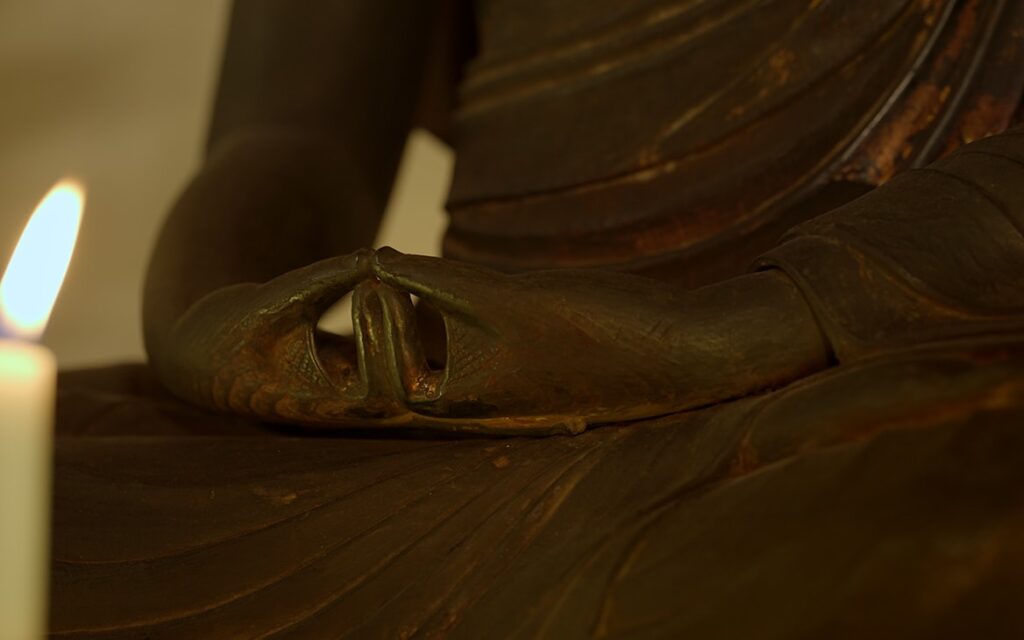
The spaces between each toe and finger are crafted with golden membranes similar to the webbing of a bird's feet, signifying the ability to save all beings without exception.
Cultural Heritage Featuring This Term
(monastic) robe
Refers to kasaya, a type of robe sewn from discarded rags, which was traditionally worn as part of the twelve ascetic practices. Over time, in China, these robes became more ornate, and in Japan, the term came to refer to the shichijo (seven piece) kasaya made from luxurious materials such as twill, brocade, and gold brocade.
Cultural Heritage Featuring This Term
meditation mudra
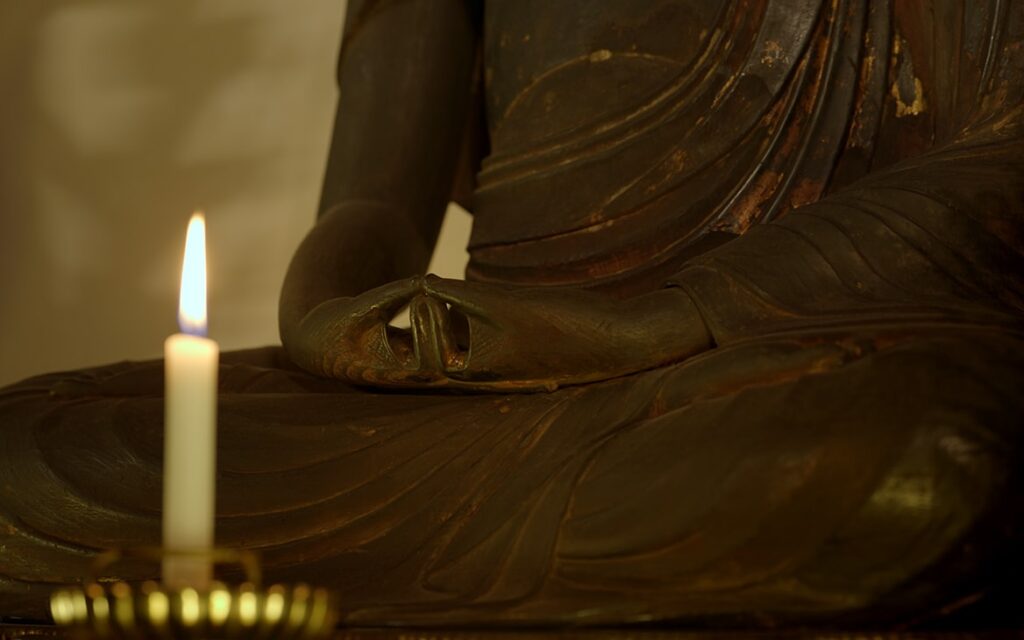
The seated statue features hands placed one atop the other below the navel, with the palms facing upward.
Cultural Heritage Featuring This Term
lotus position
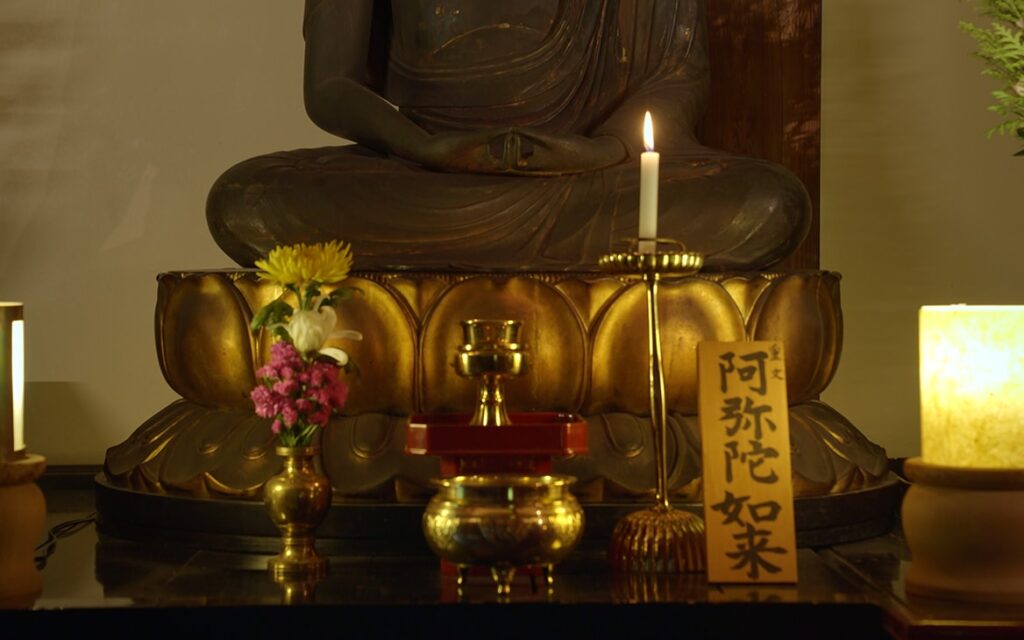
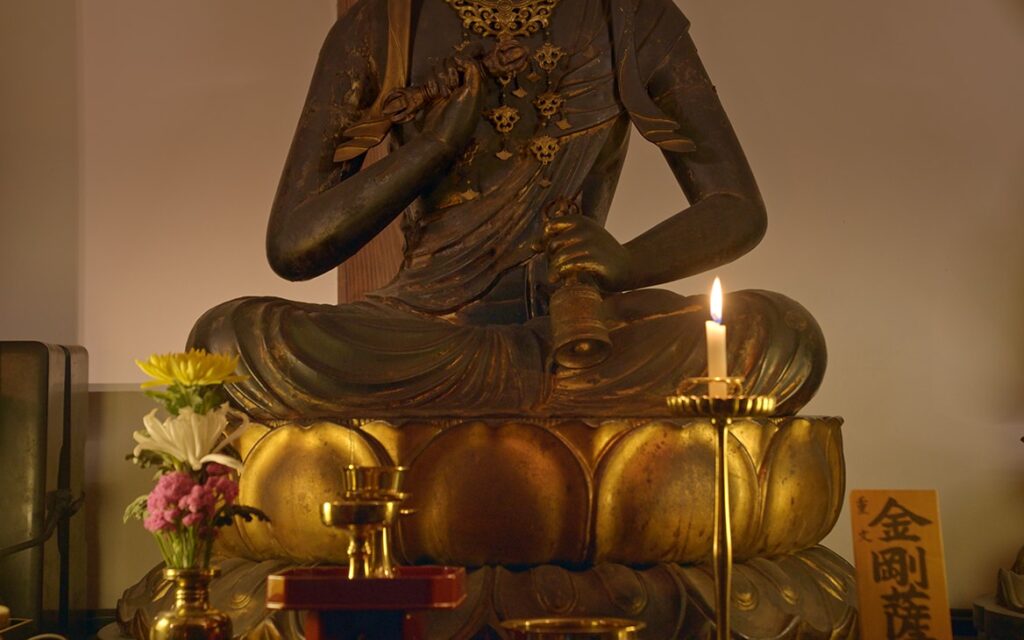
Serving as a platform for enshrining the statue, featuring a motif resembling a lotus flower viewed from above. It is the most universal type of Buddhist seat.
Cultural Heritage Featuring This Term
engraved eyes
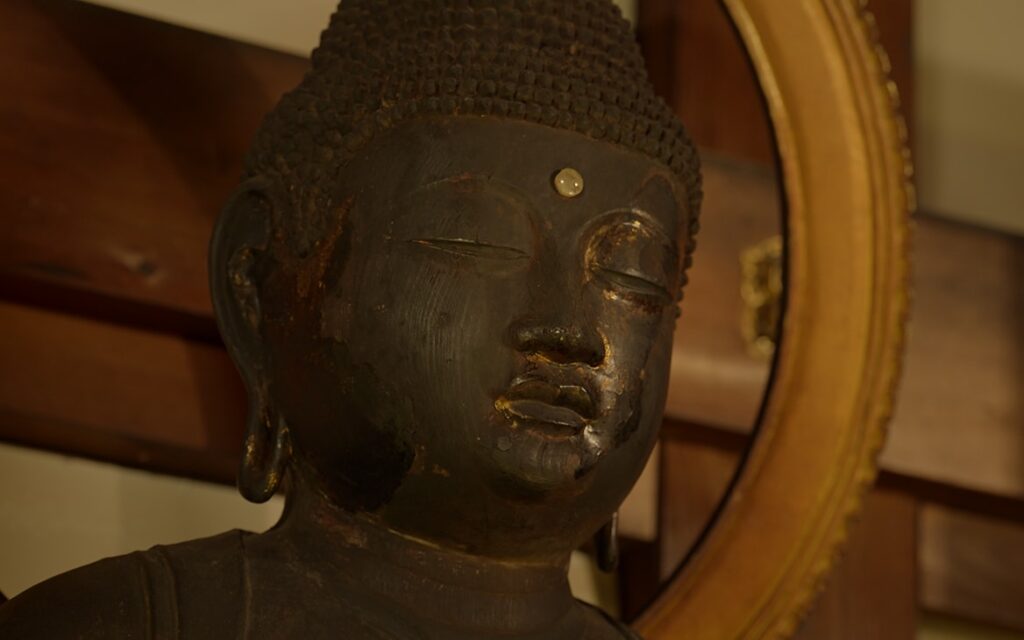
A technique seen in some wooden statues where the eyes are engraved.
Cultural Heritage Featuring This Term
urna
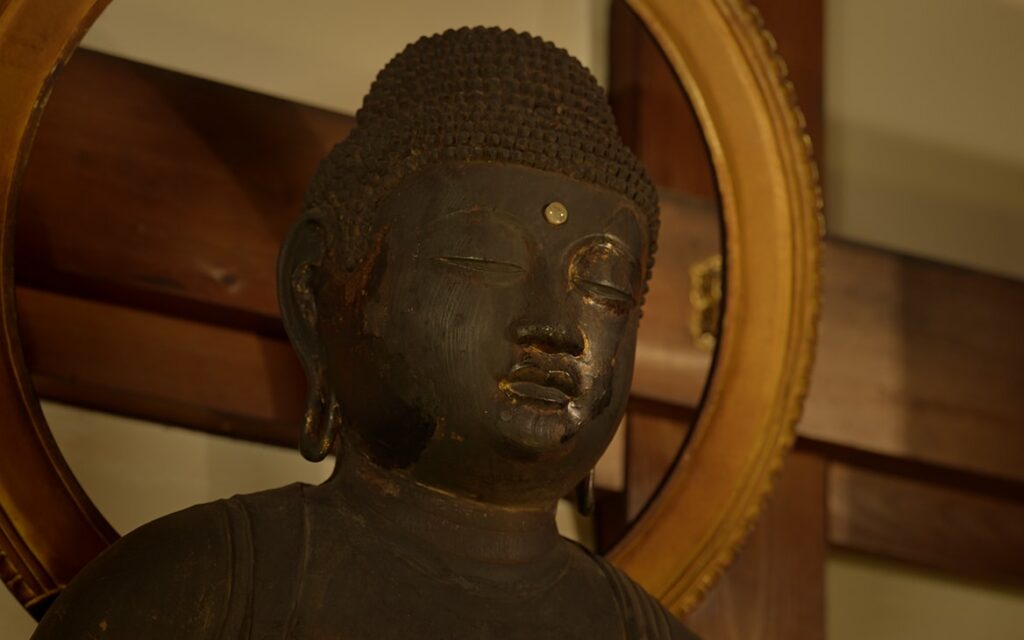
White, long, soft hair said to grow slightly above the Buddha's eyebrows, coiled to the right, and believed to extend to about 4.5 meters when uncurled. This is one of the thirty-two physical characteristics of a Buddha.
Cultural Heritage Featuring This Term
Pure Land
The Pure Land of Amida. It is an ideal world of ease and bliss, free from suffering, said to lie beyond ten trillion lands to the west.
Cultural Heritage Featuring This Term
lecture hall
A hall for preaching dharma, referred to as a hodo in Zen Buddhism. These sometimes exceed the size of the main hall, as they are used for monks within the temple to gather and deliver teachings.
Cultural Heritage Featuring This Term
Jocho
A Buddhist sculptor from the mid-Heian period. He attained the rank of hokkyo due to his achievements in creating Buddhist statues for Hosho-ji Temple. He perfected the technique of yosegi-zukuri.
Cultural Heritage Featuring This Term
Amida Nyorai (Amitabha)
The lord of the Western Pure Land, dedicated to eradicating all forms of suffering and doubt, fulfilling the wishes of all beings.
Cultural Heritage Featuring This Term
Phoenix Hall of Byodo-in Temple
The Amida Hall of Byodo-in Temple, established by Fujiwara no Yorimichi, in Uji City, Kyoto Prefecture. It is known as the Phoenix Hall because it resembles a phoenix spreading its wings.
Cultural Heritage Featuring This Term
Heian period
The Heian period lasted for approximately 400 years between the transfer of the capital to Heian-kyo (present day Kyoto) by Emperor Kanmu in 794 and the foundation of the Kamakura Shogunate in 1185. The period is often divided into three sections: the Early, Mid- and Late Heian periods. In other words, the period of reviving the political system based on Ritsuryo codes, the regency period and the Insei period (governed by a retired emperor), respectively. (The end of the Late Heian period was ruled by the Taira clan.) Also referred to as the period of the Heian imperial court.
Cultural Heritage Featuring This Term
Kei school
A faction of Nara Buddhist sculptors from the late Heian period to the Edo period, it produced skilled craftsmen across different eras.
Cultural Heritage Featuring This Term
gem
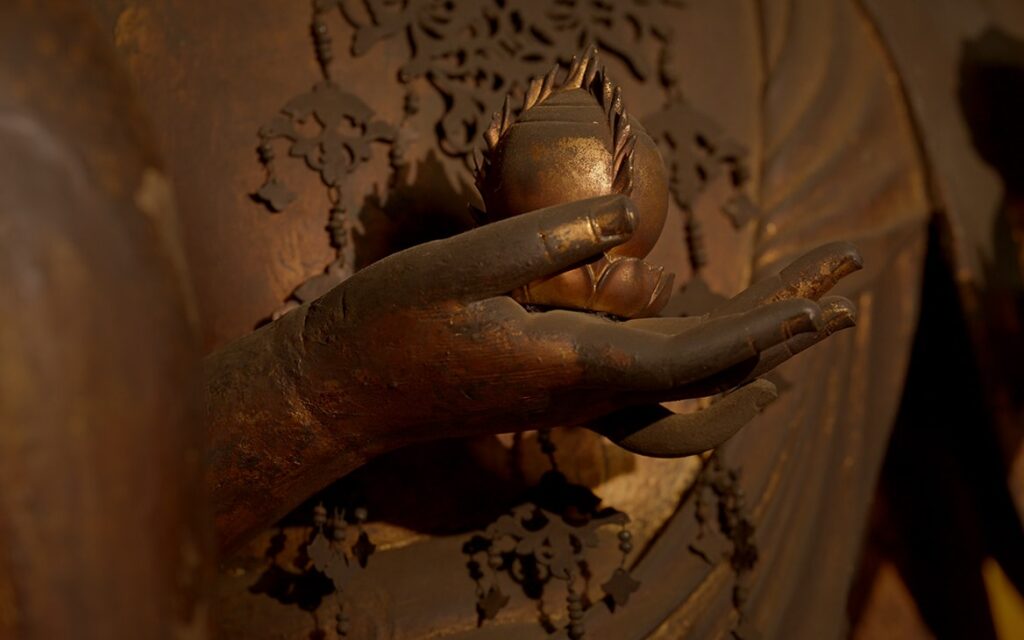
In Japan, the decorative finial is often represented as a pointed spherical shape, known as a jewel, that has the power to ward off calamities and grant wishes.
Cultural Heritage Featuring This Term
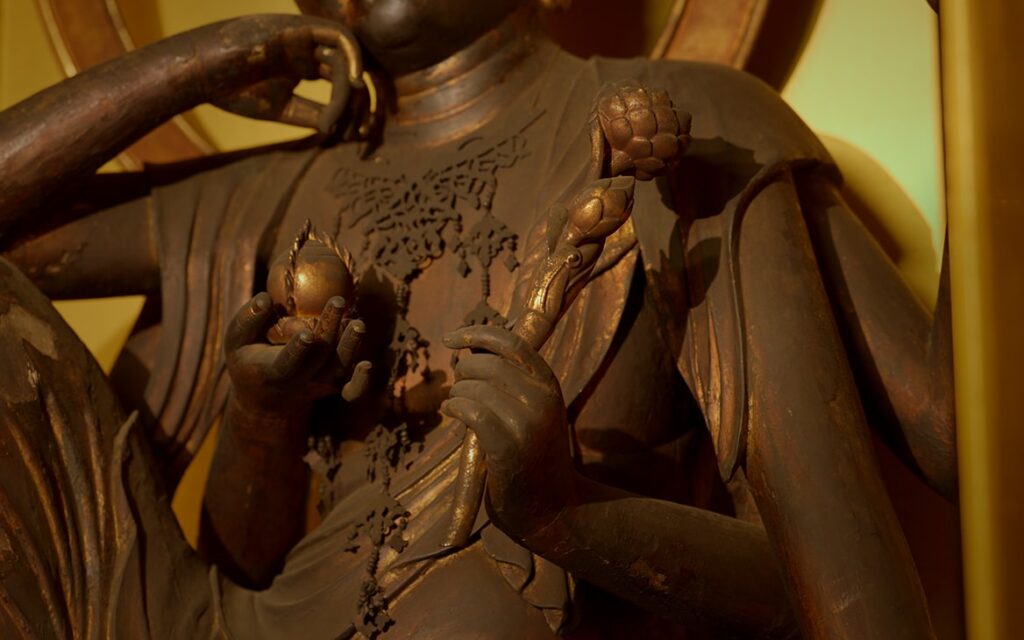
Mount Potalaka
The legendary mountain where it is said that Kannon Bodhisattva resides or descends from.
Cultural Heritage Featuring This Term
cakraratna
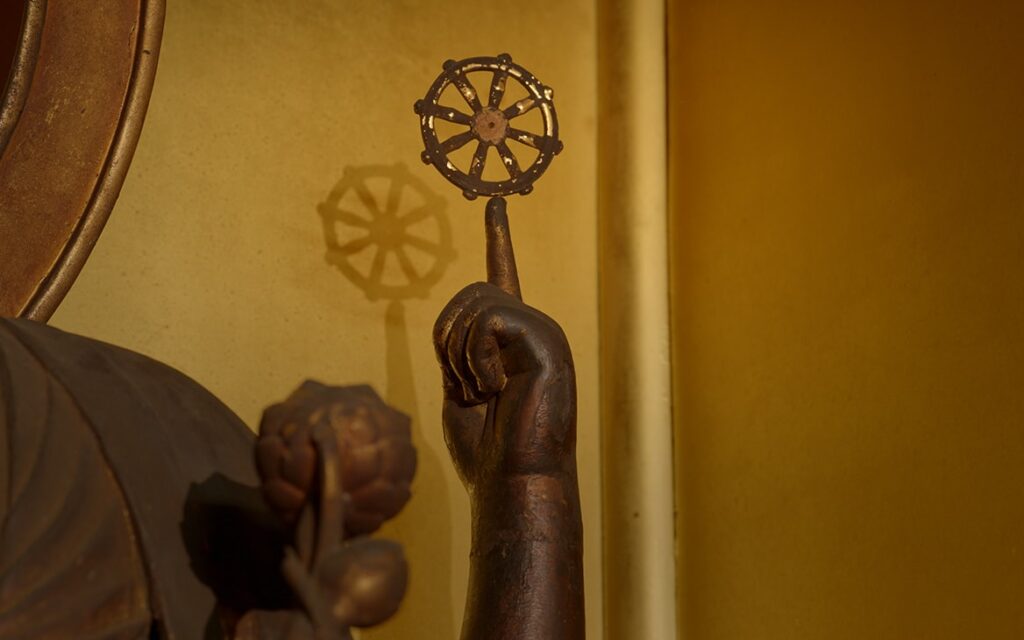
An ancient throwing weapon from India, it was incorporated into Buddhism as a metaphor for the Buddha's teachings breaking the delusions of the mind, with the teachings also being referred to as the "Turning of the Dharma Wheel." Later, it came to symbolize Shakyamuni Buddha himself.
Cultural Heritage Featuring This Term
crystal eyes
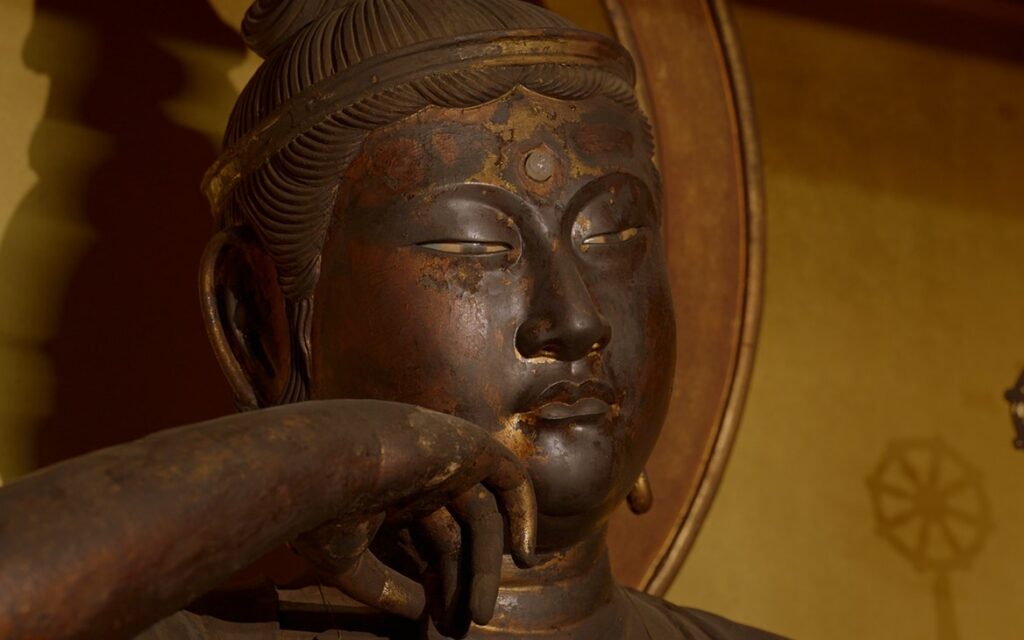
A technique involving the insertion of crystals or glass beads into the eyes of Buddhist statues.
Cultural Heritage Featuring This Term
royal ease position
A sitting position in which the right knee is raised while the soles of the feet meet.
Cultural Heritage Featuring This Term
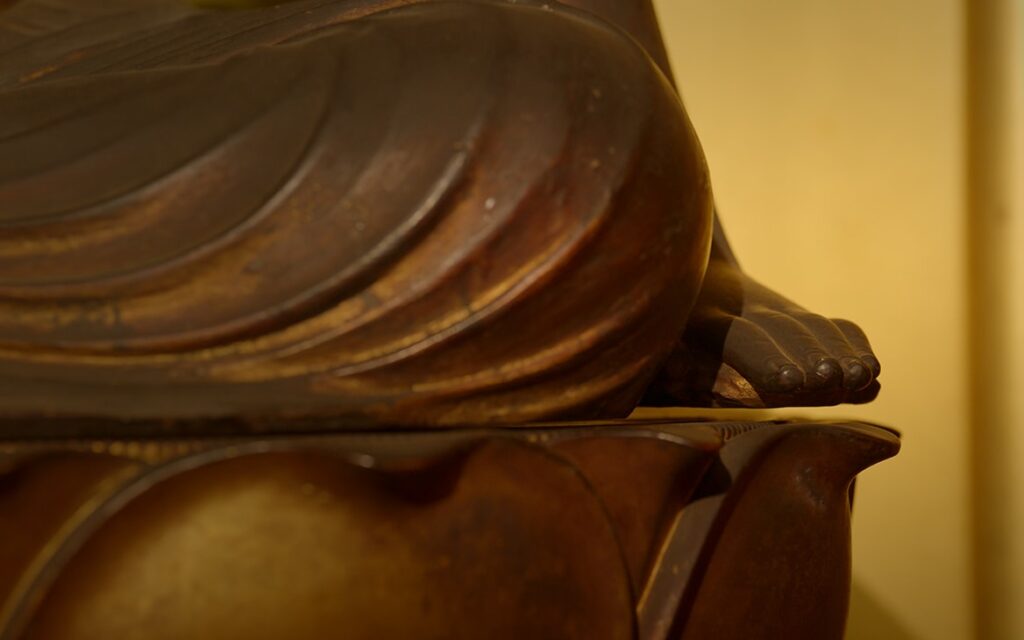
lotus pedestal
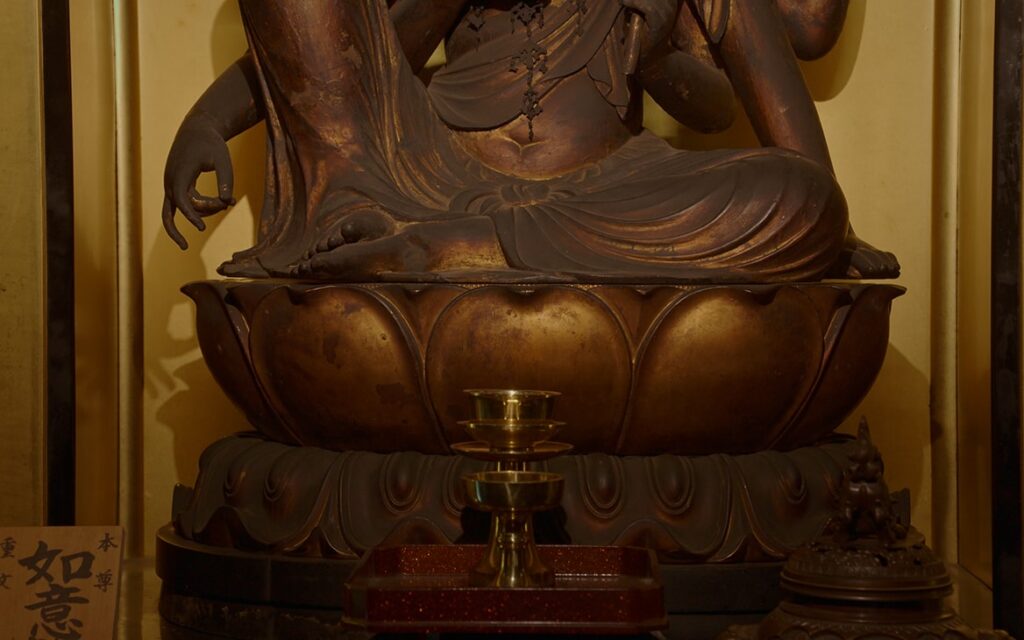
A pedestal for a Buddhist sculpture fashioned in the shape of a lotus.
Cultural Heritage Featuring This Term
lacquer and gold leaf
A lacquering technique involving individually pressing sheets of gold or silver leaf onto wooden sculptures, pillars, walls, as well as metal surfaces such as decorative fittings.
Cultural Heritage Featuring This Term
yosegi-zukuri
A wood sculpting technique in which multiple pieces of wood are combined to create the head and torso of a statue. This method involves hollowing out the interior to reduce weight, allowing for the construction of large statues with minimal wood, among other advantages. It is a technique unique to Japan and was perfected from the mid to late Heian period (794–1185).
Cultural Heritage Featuring This Term
head priest
One of the official positions appointed to oversee Buddhist monks and nuns, with the Great High Priest being the highest in the hierarchy.
Cultural Heritage Featuring This Term
High Priest Shingon
A Shingon sect monk active from the late Heian to the early Kamakura period, specifically 1151-1236. After serving as the head of To-ji Temple and as the first monzeki head priest of Zuishin-in, he was appointed as the abbot of Todai-ji Temple. He conducted rain-making rituals and prayers for safe childbirth at the imperial court, earning the title of Great Head Priest of Zuishin-in.
Cultural Heritage Featuring This Term
monzeki
A specific temple served by a member of the imperial family or a court noble as its head priest. Can also refer to the head priest themselves. By the Muromachi period (1336–1573)
Cultural Heritage Featuring This Term
abbot
Originally used to refer to a high-ranking official position (betto) within the Ritsuryo system, the term later came to designate monks who served as administrators overseeing temple affairs in major temples such as Todai-ji, Kofuku-ji, and Shitenno-ji.
Cultural Heritage Featuring This Term
Todai-ji
Founded in the early 8th century by Emperor Shōmu, this temple serves as the head temple of the Kegon sect. The principal image is the Vairocana Buddha, commonly known as the Great Buddha of Nara, and its Great Buddha Hall is one of the largest wooden structures in the world.
Cultural Heritage Featuring This Term
miniature shrine
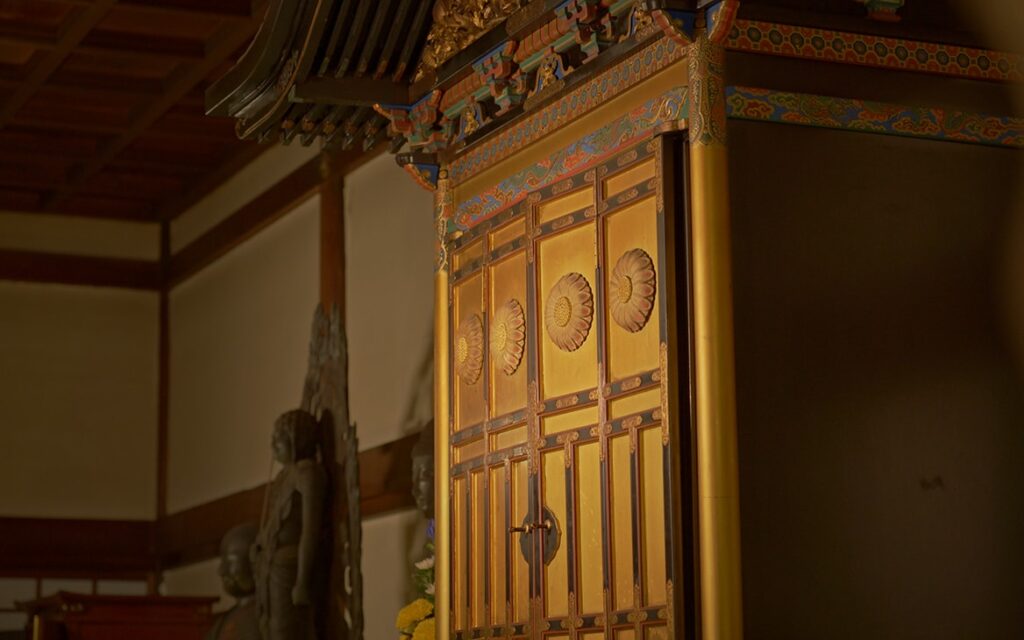
A sacred object for enshrining items such as Buddhist statues, relics, and sutra scrolls.
Cultural Heritage Featuring This Term